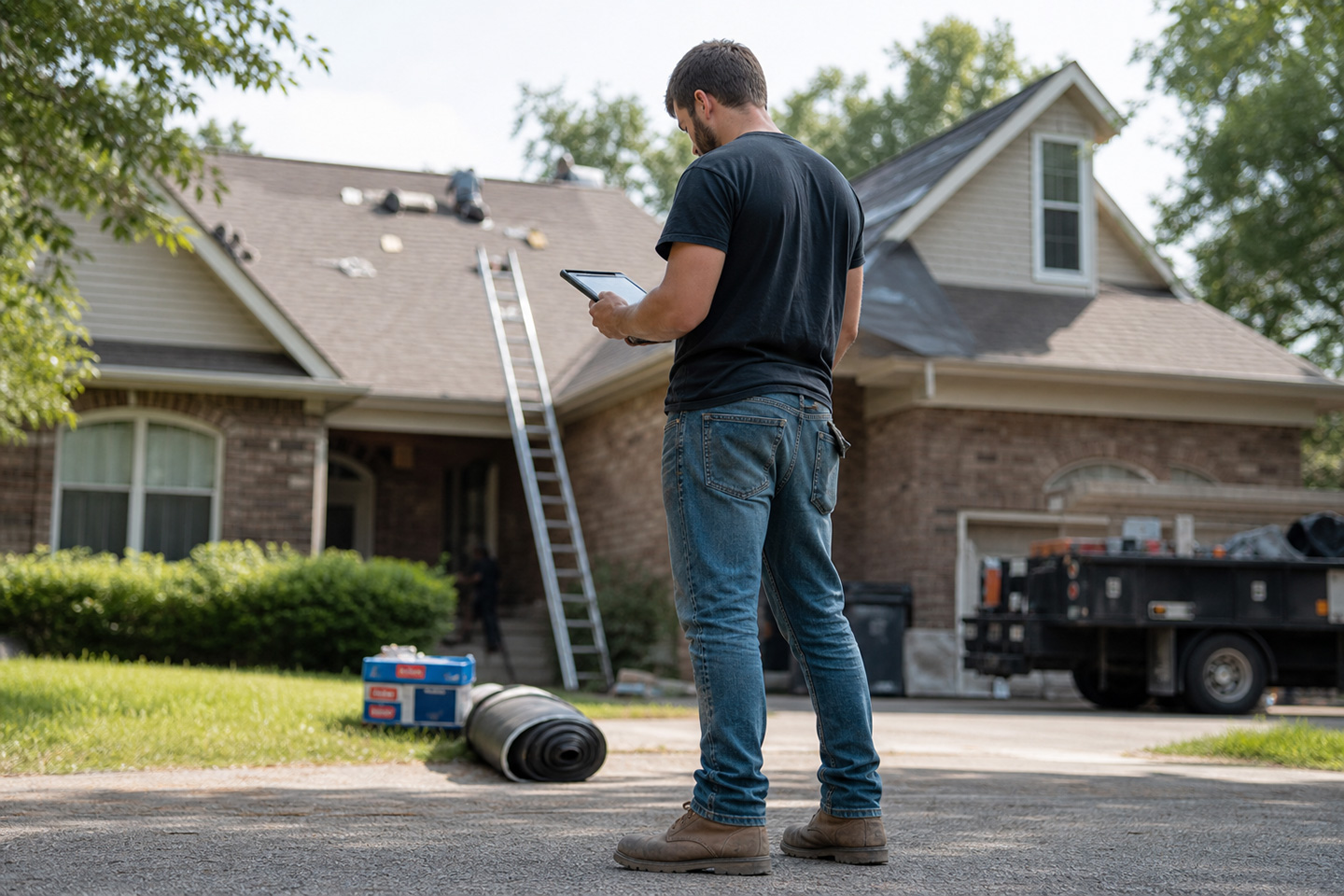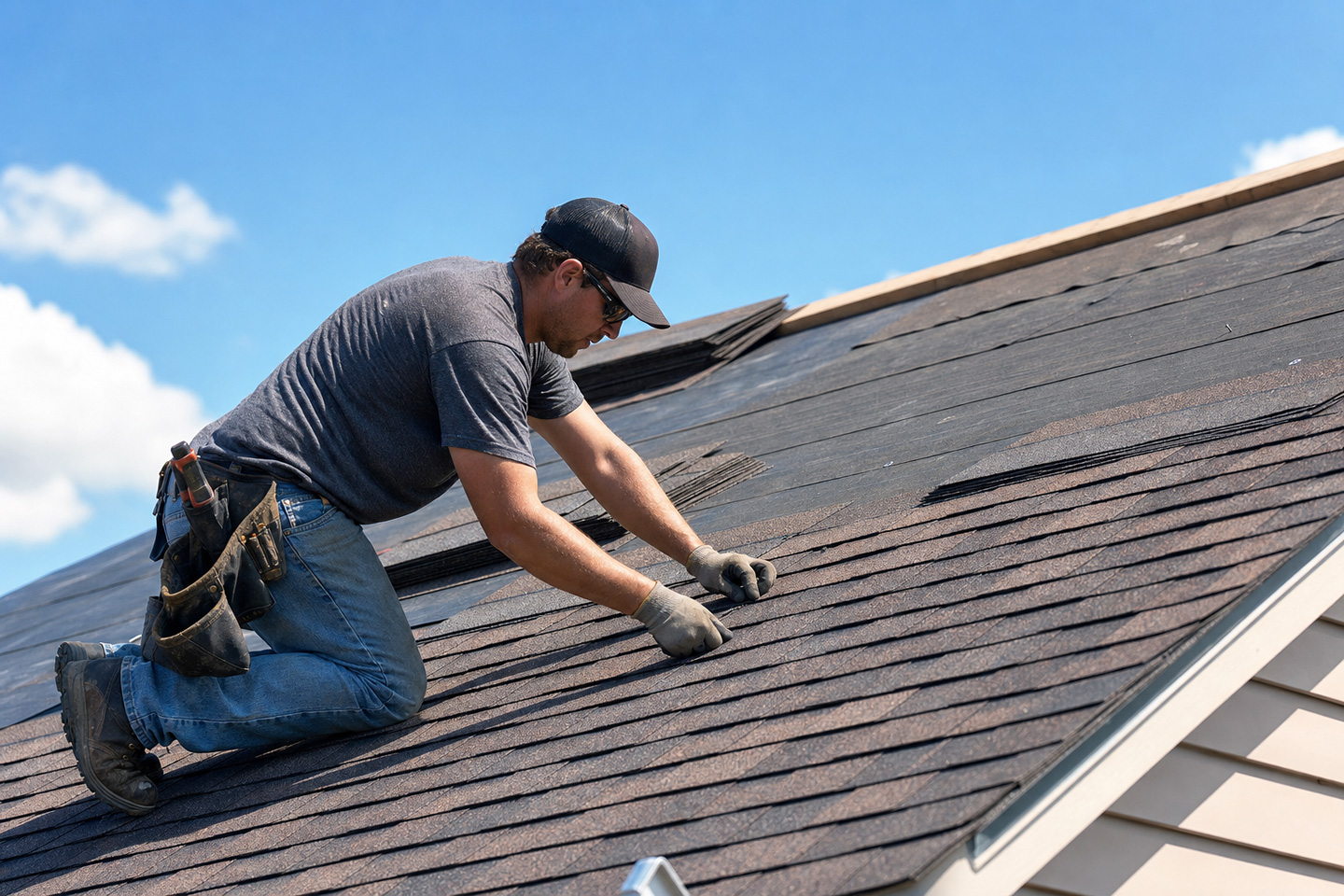


Roofing contractors face a critical challenge that has nothing to do with materials or weather. It’s managing business complexity with software that fights them at every turn. The difference between profitable growth and operational chaos often comes down to choosing the easiest roofing contractor software that field teams will actually embrace. Unlike generic business software that requires extensive training, the right platform adapts naturally to how roofing work is done, from storm-damage assessments to multi-phase commercial installations.
In this article, you’ll discover:
- Why team adoption determines CRM success for roofing contractors
- Key features that make a roofing CRM intuitive in real-world conditions
- How the right platform reduces onboarding time and administrative overhead
- Why Zuper’s configurable approach delivers ease of use without sacrificing power
Team Adoption Determines CRM Success
The roofing industry faces unprecedented labor shortages. With skilled technicians harder to find than ever, contractors cannot afford to waste their teams’ time on clunky software. According to industry data, the primary reason CRM implementations fail isn’t features or pricing; it’s because field crews simply stop using the system.
When technicians spend more time fighting software than installing roofs, three problems emerge:
- Project data becomes incomplete as frustrated crews skip steps.
- Customer communication breaks down because information scatters across text messages and spreadsheets.
- Your best people quit and move to competitors with better tools.
An easy-to-use roofing CRM solves adoption challenges by meeting field teams where they work. Instead of forcing crews to adapt workflows to rigid software, intuitive platforms adapt to how roofing projects naturally flow.
| Adoption Challenge | Impact on Operations | Solution Requirements |
| Complicated navigation | Technicians skip data entry | Intuitive mobile interface with role-based workflows |
| Poor office functionality | Lost productivity in weak coverage areas | Full offline mode with automatic sync |
| Excessive training time | New hires take weeks to become productive | Guided workflows and contextual help |
| Feature overload | Teams use only 20% of functionality | Configurable interface showing relevant tools |
| Disconnected tools | Information is scattered across platforms | All-in-one system for CRM, scheduling, and invoicing |
What Makes a CRM the Easiest Roofing Contractor Software
Genuine ease of use extends beyond clean interfaces. The platform must function reliably where roofing work happens: on rooftops in remote locations, during rushed estimates, and when coordinating multiple crews across project phases.
Mobile-First Design That Works Offline
Roofing teams work in areas with spotty cellular coverage. An easy-to-use roofing CRM provides full functionality through mobile apps that operate seamlessly offline. Technicians complete estimates, capture photos, collect signatures, and process payments without requiring a constant internet connection. When connectivity returns, apps automatically sync without manual intervention.
The best mobile apps use GPS stamps for time tracking, push notifications for urgent updates, and photo capture with automatic organization by job and date. Field crews access complete customer histories, review specifications, and update job status with just a few taps.
Intuitive Workflow Configuration
Every roofing business operates differently. The most user-friendly platforms offer no-code workflow builders that let you configure forms, approval steps, project stages, and automation without IT support. When platforms force you to adapt proven processes to rigid structures, adoption suffers. When platforms adapt to your workflow, crews intuitively understand the system because it mirrors how they already work.
How Easy Systems Reduce Operational Overhead
Administrative overhead represents one of the highest hidden costs in roofing. Manual data entry, hunting for project details, and coordinating disconnected apps drain 15+ hours per week from contractors who could focus on revenue-generating activities.
Automatic Data Capture and Centralized Access
Intelligent platforms eliminate repetitive data entry by automatically capturing information at the source. When technicians complete inspections, photos are organized automatically by job and date. Voice notes are transcribed and attached to correct projects. Customer communications log against job tickets without manual updates.
Zuper’s AI-powered features take automation to the next level. AI Call Summary extracts key decisions from conversations. AI Job Summary assembles notes, photos, and updates into structured recaps. AI Expense Scanner captures receipt details and logs them to correct jobs, eliminating paperwork.
When customer data, scheduling, estimates, and financials are centralized in one searchable system, efficiency improves immediately. Sales reps access complete histories during calls. Dispatchers see real-time crew locations. Project managers track materials, progress, and budget from a single dashboard.
Key Features to Evaluate for CRM Usability
When assessing roofing CRM options, test specific features revealing genuine ease of use. Request interactive demos, completing actual workflows, from capturing leads through final invoicing.
Customer Portal and Communication Tools
Modern homeowners expect instant communication and transparency. Simple roofing CRM solutions provide customer portals where clients view quotes and photos, approve proposals, track progress with real-time ETAs, pay invoices, and request services, without calling your office.
Communication tools should integrate directly with the CRM. Zuper Connect manages calls and texts within the system, automatically linking conversations to job tickets. Automated notifications keep customers informed about changes and milestones. AI Responder handles after-hours calls without requiring staff to be present.
Seamless Integration Ecosystem
Your roofing business relies on accounting software, material suppliers, measurement tools, and payment processors. The integration ecosystem determines whether your CRM becomes a central hub or another disconnected tool.
Zuper offers 60+ pre-built integrations, including QuickBooks for accounting sync, Hover and GAF QuickMeasure for measurements, SRS Distribution for supply chain, HubSpot for advanced CRM, and Zuper Pay for payment processing.
Why Zuper Delivers Unmatched Ease of Use
Zuper stands out as the most comprehensive and intuitive solution, making it the easiest roofing contractor software to use. The platform earned the highest usability score (9.4/10) in research analyzing 47 roofing CRM systems because it was designed specifically for field service operations.
Configurable Without Coding
Zuper’s no-code workflow builder lets contractors customize every aspect to match exact processes without technical expertise. Modify forms, approval steps, project stages, and automation in minutes. Most changes take effect immediately, unlike competitors who require lengthy development cycles.
Faster Team Onboarding and Complete Integration
Contractors using Zuper report that new hires become productive in one to two weeks, versus six to eight weeks with alternatives. The platform achieves this through guided workflows, role-based interfaces, AI-transcribed voice notes, offline functionality, and visual organization.
Instead of cobbling together separate tools for CRM, scheduling, estimating, proposals, project management, invoicing, and payments, Zuper provides everything in one connected system. This consolidation reduces software costs while dramatically improving efficiency.
Make the Switch to Simple Roofing CRM Solutions
The difference between profitable operations and chaos comes down to technology that helps teams work faster. Simple CRM solutions for roofing contractors like Zuper eliminate adoption barriers, training overhead, and workflow friction that plague contractors using complex software or fragmented solutions.
When field crews complete inspections, generate proposals, collect payments, and update job status through intuitive mobile apps that work reliably offline, productivity increases immediately. When office staff access complete information from centralized dashboards instead of hunting through disconnected systems, administrative overhead drops significantly. When customers receive automated updates and track progress through self-service portals, satisfaction improves, and payment cycles accelerate.
Stop losing profitable projects to operational inefficiencies. Schedule a personalized demo to see how Zuper’s easiest roofing contractor software can transform your team’s productivity.