

Operating a roofing business requires more than skilled craftsmanship and quality materials. In most U.S. states, you must hold a valid roofing license to legally undertake projects, and understanding these requirements is the first step in building a compliant and profitable operation. With requirements varying dramatically from state to state, roofing contractors must navigate a complex landscape of exams, experience thresholds, insurance mandates, and renewal obligations.
This guide breaks down roofing license requirements by state across all 50 states, helping you understand where you need credentials, what it takes to earn them, and how field service management software can simplify compliance tracking as your business grows.
What You’ll Learn
- Which states require roofing licenses, and which do not
- Common licensing requirements, including exams, experience, and bonding
- Specific licensing thresholds and classifications by state
- How to maintain and renew your roofing credentials
- Digital tools that help manage compliance across multiple jurisdictions
Roofing License Requirements by State
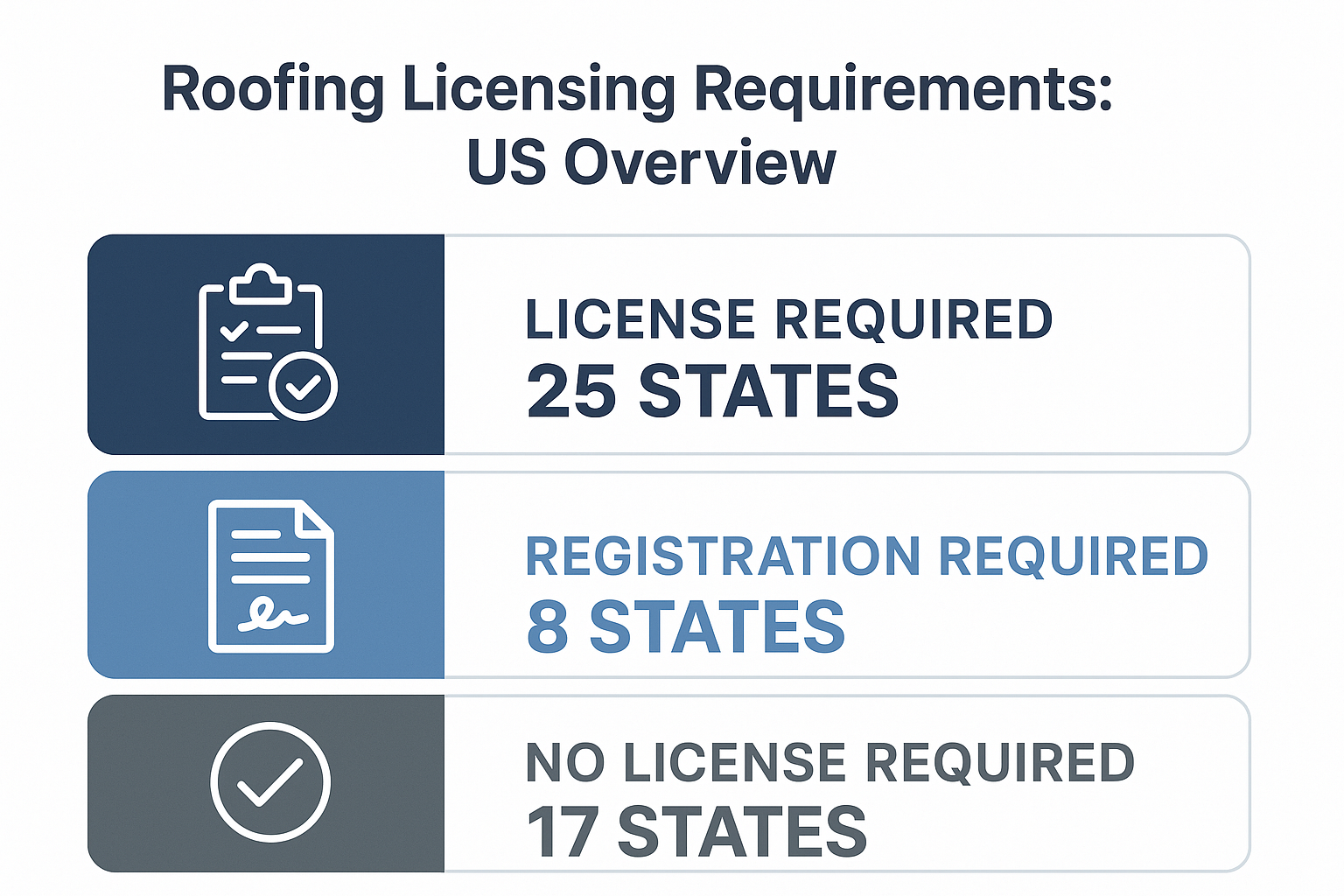
The licensing landscape varies significantly across the United States. Some states enforce strict licensing with mandatory exams and years of documented experience, while others require only basic registration or no state-level credentials at all.
| License Status | States | Key Requirements |
| License Required | Alaska, California, Florida, Hawaii, Illinois, Louisiana, Maryland, Massachusetts, Michigan, Minnesota, Nevada, New Mexico, North Dakota, Oregon, Rhode Island, Utah, Virginia, West Virginia, Wisconsin | State exams
2-4 years of experience Bonding ($10,000-$15,000) Insurance verification |
| License Required (Threshold-Based) | Alabama, Arizona, Arkansas, Mississippi, North Carolina, Tennessee | Required for projects above $10,000-$50,000, depending on the state |
| Registration Required | Iowa, Kansas, Montana, Nebraska, New Jersey, Oklahoma, South Carolina, Washington | Business registration
Insurance proof No exam is typically required |
| No State Requirements | Colorado, Connecticut, Delaware, Georgia, Idaho, Indiana, Kentucky, Maine, Missouri, New Hampshire, New York, Ohio, Pennsylvania, South Dakota, Texas, Vermont, Wyoming | Local regulations may apply
Voluntary certification is available |
State-Specific Licensing Requirements
California
California mandates a C-39 Roofing Contractor License through the Contractors’ State License Board. Applicants must demonstrate four years of journeyman-level experience, pass both trade and law exams, and secure a $15,000 contractor bond. The state requires fingerprinting and background checks, with licenses renewed every two years.
Florida
Florida requires all roofing contractors to obtain certification through the Department of Business and Professional Regulation. The process includes four years of experience (one year as a foreman), passing a comprehensive two-part exam, undergoing a background screening, credit review, and providing proof of general liability and workers’ compensation insurance.
Illinois
Illinois issues three types of roofing licenses: Limited (residential, eight units or fewer), Unlimited (residential and commercial), and Commercial/Industrial. All require passing state exams administered by the Department of Financial and Professional Regulation. Contractors with employees are required to post a $10,000 surety bond.
Minnesota
Any roofer earning more than $15,000 annually must hold a state license in Minnesota. The Department of Labor and Industry requires passing the residential roofer trade exam, proof of insurance, and a $15,000 surety bond. Subcontractors earning below this threshold are still required to register with the Contractor Registration Program.
Nevada
Nevada requires a C-15a Roofing Contractor License from the State Contractors Board. Applicants need four years of experience within the past decade as a journeyman, foreman, or contractor. Education can substitute for some experience requirements. The state mandates that contractors obtain a bond and workers’ compensation insurance.
Threshold-Based Licensing
Several states require licenses only when project values exceed specific amounts:
- Alabama: $50,000+ commercial, $10,000+ residential
- Arkansas: $2,000+
- Louisiana: $75,000+ commercial, $7,500+ residential
- Mississippi: $10,000+ residential, $50,000+ commercial
- North Carolina: $30,000+
- North Dakota: $4,000+
- Tennessee: $25,000+
These thresholds determine whether you need a full contractor’s license or can operate with basic registration. Working above these amounts without proper licensing can result in fines, project shutdowns, and legal liability.
States Requiring Registration Only
Iowa, Kansas, Montana, Nebraska, New Jersey, Oklahoma, South Carolina, and Washington require roofing contractors to register with state agencies, but do not mandate formal licensing exams. Registration typically involves:
- Business information submission
- Proof of general liability insurance
- Workers’ compensation coverage verification
- Annual or biennial renewal
- Payment of registration fees
While less rigorous than full licensing, registration still creates a public record of your business and ensures basic insurance protections are in place.
States Without State-Level Requirements
Twenty-three states do not require roofing licenses at the state level: Colorado, Connecticut, Delaware, Georgia, Idaho, Indiana, Kentucky, Maine, Missouri, New Hampshire, New York, Ohio, Pennsylvania, South Dakota, Texas, Vermont, and Wyoming. However, “no state requirement” does not mean “no regulation.” Many municipalities within these states enforce their own licensing or registration rules.
For example, while Texas does not mandate state licensing, many cities require permits and business registration. The Roofing Contractors Association of Texas offers voluntary certification that helps contractors demonstrate professionalism and credibility.
Common Licensing Requirements Across States
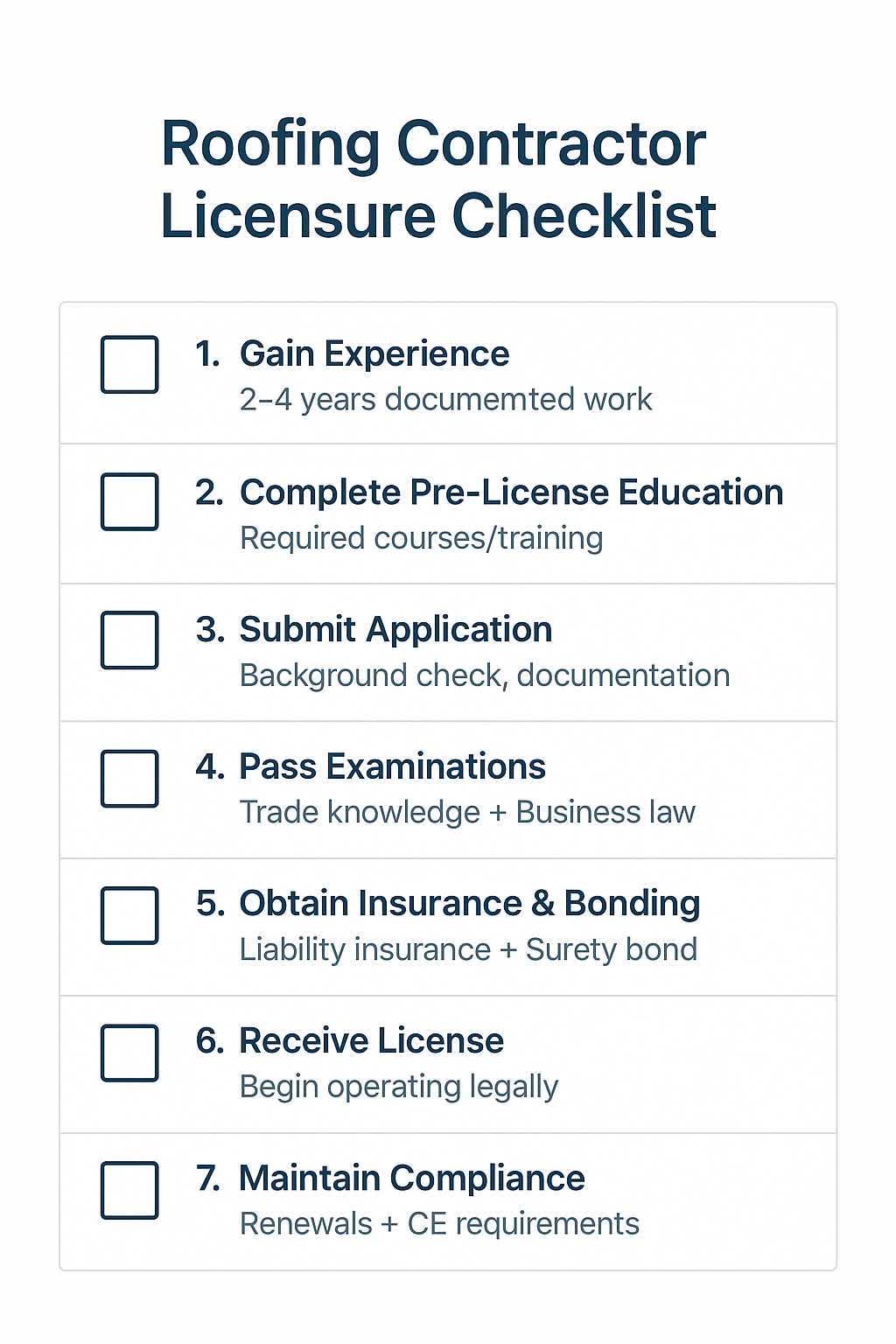
Despite varying regulations, most licensing systems share similar components:
Experience Requirements
States typically require two to four years of hands-on roofing experience. California and Florida both mandate four years, with at least one year in a supervisory capacity. Experience must often be documented through employer affidavits, tax records, or project portfolios.
Examinations
Most states require passing one or more exams covering:
- Trade knowledge: Roofing materials, installation techniques, safety protocols, and industry best practices
- Business and law: Contract law, lien rights, insurance requirements, labor regulations, and financial management
Third-party testing vendors, such as PSI and Prometric, typically administer these exams. Pass rates vary, but thorough preparation significantly improves outcomes.
Insurance and Bonding
General liability insurance is nearly universal, with minimum coverage requirements ranging from $300,000 to $1 million. Many states also require:
- Workers’ compensation insurance (if you have employees)
- Contractor surety bonds ($10,000-$15,000 typical)
- Proof of financial responsibility
Background Checks
Several states require fingerprinting and background screening. Applicants with certain criminal convictions may face denial or restrictions on their licenses.
Keeping Your Roofing License Current
Earning your license is just the beginning. Maintaining compliance requires ongoing attention to renewal deadlines and continuing education requirements.
Renewal Cycles and Deadlines
Most states require license renewal every one to three years:
- Annual renewals: Mississippi, Rhode Island
- Biennial renewals: California, Florida, Michigan, Oregon
- Triennial renewals: Virginia
Missing renewal deadlines can result in license suspension, forcing you to stop work until you’re compliant. Late fees, reapplication requirements, or even retaking exams may be necessary for expired licenses.
Continuing Education Requirements
Many states mandate continuing education (CE) for license renewal. Requirements vary but typically range from 8 to 24 hours per renewal cycle. CE topics often include:
- Updated building codes and safety standards
- New roofing materials and installation techniques
- Business management and customer service skills
- OSHA safety training
- Environmental regulations and sustainability practices
Florida requires 14 hours of continuing education for biennial renewal. California requires ongoing professional development to maintain C-39 licenses. Even in states without formal CE requirements, staying current with industry standards and best practices is essential for competitive advantage.
Tracking Compliance Across Multiple States
Roofing contractors operating in multiple states face the challenge of managing different licensing requirements, renewal dates, and CE obligations. Spreadsheets and paper files quickly become overwhelming as your business grows.
Modern field service management software helps track:
- License expiration dates for all technicians
- Continuing education completion status
- Insurance policy renewal deadlines
- Bond expiration alerts
- Certification requirements by jurisdiction
Automated reminders ensure you never miss a deadline, protecting your ability to work legally and avoiding costly compliance gaps.
Managing Licensing with Field Service Software
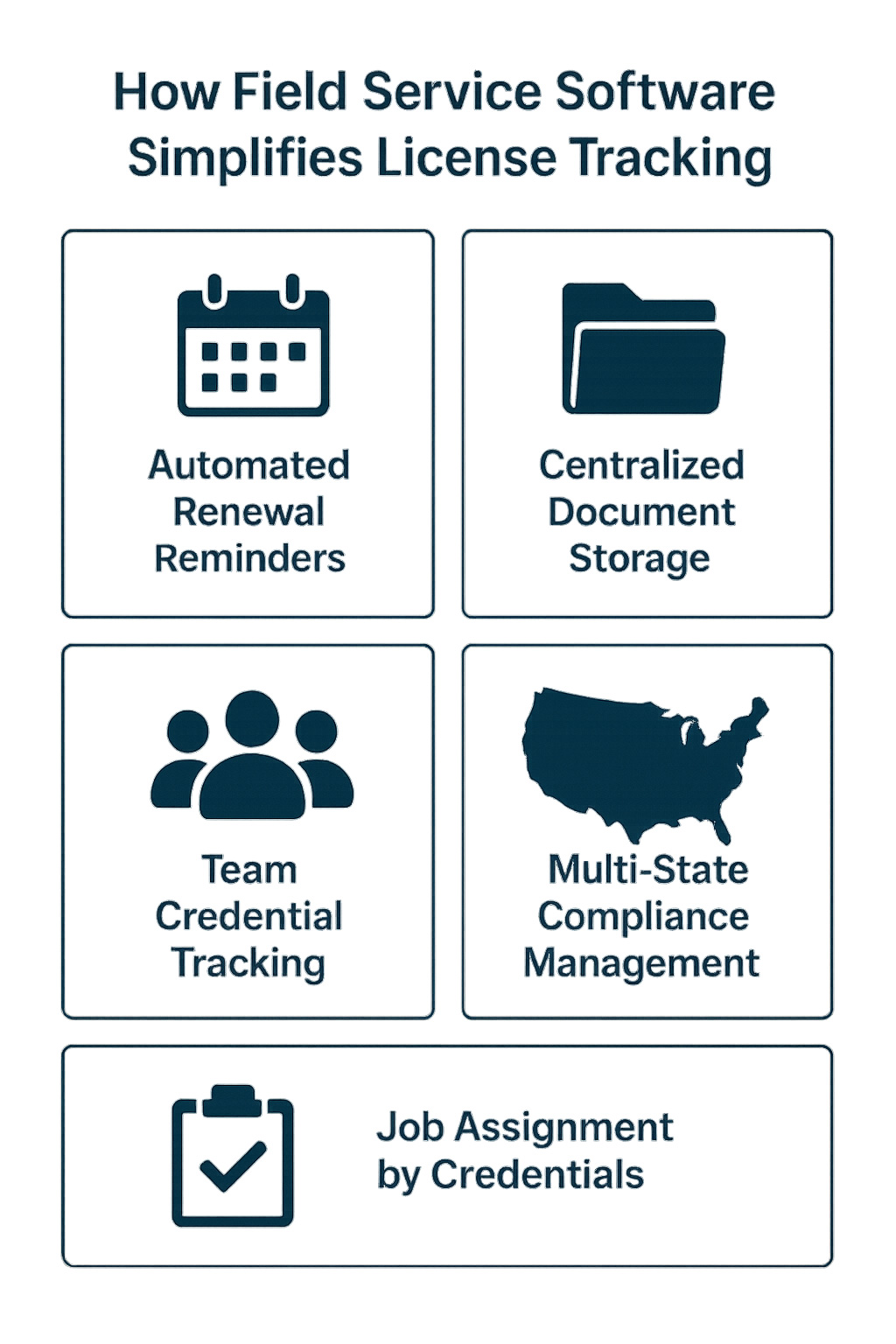
As your roofing business expands, managing compliance becomes increasingly complex. Zuper’s field service management platform for roofers provides centralized visibility into licensing status across your entire team. Track certifications, set automated renewal reminders, and store digital copies of licenses and insurance documents in one secure location.
When dispatching jobs, Zuper’s intelligent system can automatically assign projects to properly licensed technicians based on their credentials and the job location’s requirements. This ensures compliance while optimizing your workforce allocation.
Real-time location tracking and job documentation features also create an audit trail that demonstrates proper licensing and insurance coverage to clients and regulators. For businesses working across multiple states, centralized compliance management reduces administrative burden and protects your reputation.
Building a Compliant Roofing Business
Understanding roofing license requirements by state is fundamental to operating legally and building customer trust. Whether you’re navigating California’s rigorous C-39 process, managing threshold requirements in North Carolina, or working in Texas, where licensing is optional, compliance protects your business from legal exposure and positions you as a professional contractor.
As licensing requirements continue to evolve, staying current with renewal deadlines and continuing education ensures uninterrupted operations. By combining proper licensing with efficient field service management tools, you can focus on what matters most: delivering exceptional roofing services that will drive business growth.
Ready to streamline your roofing operations while maintaining full compliance? Discover how Zuper helps roofing contractors manage licensing, scheduling, and customer communications from one powerful platform.