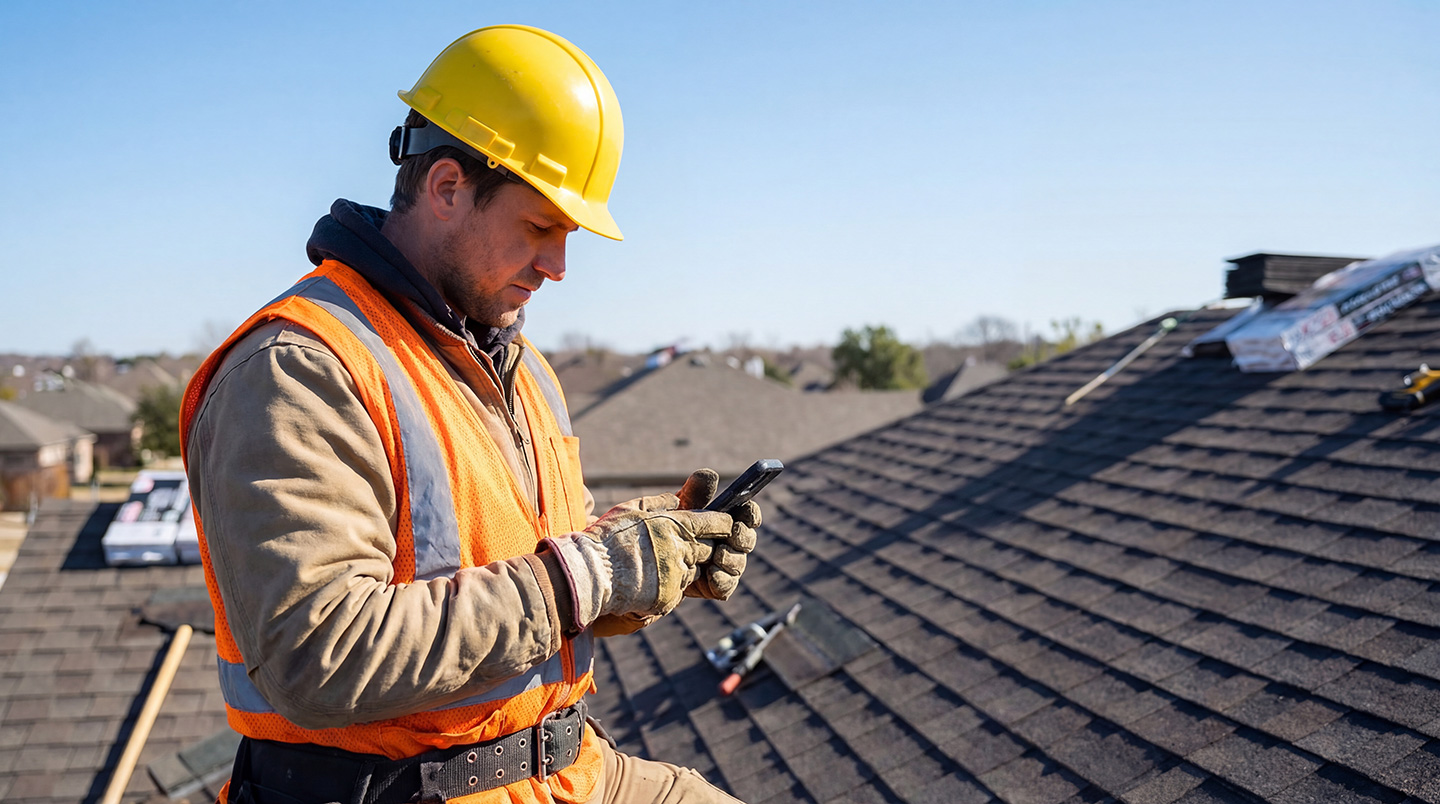


If you’re running a roofing company in 2026, you already know the pressure: you can’t find enough skilled workers, material costs keep jumping around, and homeowners expect you to respond as fast as Amazon. Recent industry research shows which CRM features actually move the needle for roofing operations, and which ones just look good on sales demos. The most important CRM features for roofers aren’t the flashiest ones. Contractors who nail the basics (unified data, automated workflows, real-time tracking, and integrated communication) consistently outperform those drowning in complicated software they don’t actually use.
High-Impact CRM Features for Roofers
The most important CRM features for roofing reduce complexity and improve visibility.
| Feature Category | Measurable Outcome | Avg. Time Saved Per Week | Impact on Business |
| Unified Customer Data | Eliminates duplicate entry & information silos | 14 hours | +29% avg. sales increase |
| Workflow Automation | Automatic lead routing & follow-ups | 8-15 hours | 40% faster new-hire ramp-up |
| Real-Time Project Tracking | Instant status visibility & bottleneck identification | 12 hours | Up to 15% productivity gain + up to 6% cost reduction |
| Integrated Communication | Centralized calls, texts, and emails in CRM | 6-10 hours | 82% say automation gives more time for relationships |
| Mobile Field Access | Offline functionality & on-site payment collection | 7 hours | 20%-30% productivity gains |
| AI-Powered Features | Call transcription, photo organization, auto-responses | 8-12 hours | 50% reduction in call time |
Feature #1: Unified Customer and Project Data Management
The foundation of the most important CRM features for roofers is centralized data storage that eliminates information silos. When customer details, communication history, estimates, photos, and project updates live in separate systems, critical information disappears when team members need it most.
Unified data management delivers three measurable outcomes:
- Eliminated duplicate entry – field teams capture information once
- Complete relationship history – every interaction appears chronologically
- Instant information retrieval – accessing complete project files in seconds
Forrester Research found that sales reps waste about 14 hours per week on administrative tasks, including data entry, internal meetings, and CRM updates, time that unified systems can dramatically reduce. Companies using CRM software report an average 29% increase in sales by eliminating this waste and ensuring consistent follow-up. For example, Zuper’s customer management links contact information, service history, estimates, proposals, invoices, and communications in searchable profiles that track the entire customer journey.
Feature #2: Intelligent Workflow Automation
Automation transforms CRM from a digital filing cabinet into an active business partner. High-value automation includes:
- Automatic Lead Routing – new leads are immediately assigned to the appropriate sales representative
- Triggered Follow-Up Sequences – the CRM automatically sends relevant communications when projects reach specific pipeline stages
- Status-Based Project Progression – completed phases automatically advance projects and trigger invoicing
- Smart Task Creation – specific events automatically create tasks for team members
Zuper’s automated workflows include appointment reminders, estimate follow-ups, and post-job review requests that execute without manual intervention. Roof Doctors cut call times in half and shortened new-hire onboarding from weeks to minutes after implementing automated workflows.
AI automation typically saves small businesses 8-15 hours per week by eliminating repetitive tasks like email follow-ups, lead routing, scheduling, and invoice generation. Companies using comprehensive automation achieve 40% faster new-hire ramp-up times, as seen with Maven Roofing’s experience implementing Zuper.
Feature #3: Real-Time Project Visibility and Tracking
Operational blindness costs roofing contractors money. When project managers can’t instantly answer “What’s the status of the Johnson roof?” delays multiply, and profit margins erode.
Real-time project tracking solves this through:
- Visual Pipeline Management – projects appear as cards moving through customizable stages, instantly revealing bottlenecks
- Multi-Phase Project Coordination – Zuper’s project management capabilities use Kanban boards and Gantt charts to manage dependencies across complex jobs
- Real-Time Status Updates – field crew actions instantly appear in office systems
- Exception Highlighting – the CRM automatically flags problems like jobs running over budget or estimates approaching expiration
Construction firms that adopt digital tools for real-time project tracking can improve productivity by up to 15% and reduce project costs by up to 6%, according to McKinsey research. Roofing companies waste an average of 14 hours per week on miscommunication and coordination problems when relying on manual methods, which is time that real-time tracking systems reclaim by identifying and resolving bottlenecks before they cascade.
Feature #4: Integrated Communication Tools
Communication fragmentation destroys productivity. The most important CRM features for roofers include native communication capabilities that centralize all customer contact through:
- CRM-Based Calling – dedicated phone numbers that automatically log calls
- Native Text Messaging – built-in SMS with all messages appearing in customer timelines
- Email Integration – outbound and inbound emails automatically attach to customer records
- Call Transcription – Zuper’s AI capabilities transcribe calls and extract action items automatically
Unified communication creates institutional knowledge that survives employee turnover. When a sales representative leaves, their successor inherits the complete customer relationship history rather than starting from zero. 82% of sales professionals say building relationships and connecting with people are both the most important and most enjoyable parts of their job, which is time that unified communication systems protect by eliminating the need to hunt down conversation histories across disconnected systems.
Feature #5: Mobile-First Field Access
The most important CRM features for roofers must work where roofing happens: on job sites. Critical mobile capabilities include:
- Offline Functionality – Zuper’s mobile application works fully offline with automatic sync when connectivity returns
- Voice-to-Text Documentation – converting spoken observations into structured records
- Photo and Video Capture – directly within the CRM with automatic project linkage
- Digital Signatures and Payment Processing – completing contracts and collecting payments on-site
Without proper mobile tools, field workers waste approximately 7 hours per week on inefficient, unproductive tasks such as manual re-entry, searching for information across disconnected systems, and administrative paperwork. Mobile-first CRM platforms reclaim this time by eliminating duplicate data entry and giving technicians instant access to everything they need, enabling faster response times and the ability to close deals on-site rather than giving customers time to reconsider.
Organizations implementing comprehensive mobile strategies report productivity gains of 20-30% per working day. Mobile-first CRM platforms reclaim this time by eliminating duplicate data entry and giving technicians instant access to everything they need, enabling faster response times and the ability to close deals on-site rather than giving customers time to reconsider.
Feature #6: AI-Powered Safety and Efficiency Multipliers
AI features deliver measurable efficiency gains that compound over time while enhancing worker safety on job sites. High-impact AI capabilities include:
- AI Responder for After-Hours Inquiries – handling calls and booking appointments without human attention
- Intelligent Call Summaries – extracting key decisions automatically
- Automated Photo Organization – Zuper’s AI Walkthrough automatically organizes inspection photos by roof section
- Expense Capture – AI extracts amounts and categories from photographed receipts
- Hands-Free Capabilities – Zuper Glass allows roofers to capture photos, record videos, and complete checklists while keeping both hands free for maintaining balance and using safety equipment
While AI capabilities function as efficiency multipliers rather than foundational requirements, they’re rapidly transitioning from “nice to have” to “competitive necessity.”
Choosing a CRM: Prioritizing Features That Match Your Workflow
CRM requirements depend on company size and growth trajectory. Small Operations (1-5 employees) should prioritize unified data, mobile access, and basic automation. Growth-Stage Companies (6-25 employees) need comprehensive automation and multi-phase project tracking. Established Contractors (25+ employees) require AI capabilities and advanced analytics.
Regardless of size, choose platforms that simplify operations rather than adding complexity. Ask: “How many sales can we attribute to this CRM?” and “How quickly did it start closing deals?” Zuper’s position as “The AI Operating System for Roofing” reflects the industry trend toward comprehensive platforms that replace 5-7 disconnected tools with unified systems.
The Bottom Line: The Most Important CRM Features for Roofers
The most important CRM features for roofers, which are unified data, smart automation, real-time tracking, integrated communication, mobile access, and AI efficiency, deliver actual returns: 40-60% less admin work, improved close rates, and the operational clarity you need to make confident decisions. Stop buying impressive features that don’t move your business forward. Start with what actually saves time and makes money.
Ready to see how the most important CRM features for roofers actually work? Check out Zuper’s roofing CRM to see how unified data, smart automation, and AI-powered workflows cut through the complexity and improve your margins.