

Every roofing contractor knows the feeling. After months of back-to-back jobs and fully booked schedules, demand suddenly drops off a cliff. The phone stops ringing as frequently, estimates slow to a trickle, and your crew finds themselves with unexpected downtime.
This is the roofing slow season. The predictable lull that hits the industry when weather conditions make full roof installations impractical or unsafe. While many contractors view this period as something to simply endure, the smartest operators recognize it as the perfect opportunity to strengthen their business foundation and position themselves for explosive growth when demand returns.
The key lies in leveraging three critical business assets that many contractors overlook: your existing sales pipeline, maintenance service packages, and the valuable customer data sitting in your CRM system.
This guide offers advice for:
- Understanding when the slow season hits your specific region
- Maximizing revenue from maintenance packages and service agreements
- Working your existing customer database for growth opportunities
- Leveraging CRM data to identify sales pipeline optimization strategies
- Building systems that keep revenue flowing year-round
When Roofing Slow Seasons Strike Across the United States
| Region | Primary Slow Period | Top Challenges | Alternative Services |
| Northeast | December – March | Snow, ice, and freezing temperatures | Emergency repairs, ice dam removal |
| Midwest | November – March | Harsh winters, limited daylight | Maintenance packages, inspections |
| Southeast | January – February | Mild but unpredictable weather | Gutters, siding, and interior projects |
| Southwest | June – August | Extreme heat (secondary slow season) | Early morning/late evening work |
| Pacific Northwest | December – February | Heavy rain, limited installation windows | Storm damage repairs, assessments |
| Mountain States | November – April | Snow, altitude challenges | Planning, material prep, and training |
Roofing slow season timing varies dramatically by geographic region, primarily driven by local weather patterns and seasonal challenges. Understanding your area’s specific slow season patterns helps you plan proactive strategies rather than reactive responses.
In cold-weather states like Minnesota, Wisconsin, and Michigan, the slow season typically begins in late November and extends through March. Here, asphalt shingles won’t seal properly in freezing temperatures, making full replacements both risky and unreliable.
Southern states experience a milder slowdown, with January and February seeing reduced activity mainly due to unpredictable weather patterns and homeowner priorities shifting to indoor improvements. However, storm activity remains lower during the winter months, even in warmer climates.
The Southwest presents a unique pattern, with extreme summer heat creating a secondary slow season where crews can only work during early morning and late evening hours to avoid the dangers of high temperatures.
Maximizing Your Existing Pipeline During Slow Months
Your CRM pipeline contains untapped revenue that becomes crucial during the slow periods. Most roofing contractors accumulate dozens of warm prospects who aren’t ready to buy immediately, and these dormant opportunities become goldmines during the off-season.
Working Through Pipeline Stages Strategically
Transform your slow season into pipeline optimization time by systematically working through each stage of your sales funnel. Focus on prospects who showed initial interest but didn’t convert during the busy season due to scheduling constraints or budget timing.
Pipeline Revival Strategies:
- Recently Quoted Projects: Follow up on estimates from the past 6 months where homeowners expressed interest but didn’t commit
- Storm-Damage Leads: Insurance claim projects often take months to finalize—stay engaged throughout the process
- Maintenance Converts: Customers who started with small repairs often upgrade to full replacements when timing improves
- Referral Network: Past customers become your biggest advocates when you have the capacity to handle their referrals properly
Smart contractors use slow season downtime to implement systematic follow-up campaigns using their CRM data. This approach typically generates 15-25% additional revenue from the existing pipeline without acquiring new leads.
Leveraging CRM Data for Account-Based Growth
Your CRM (Customer Relationship Management) system contains valuable data on customer behavior that reveals growth opportunities during slow periods. Analyze past customer patterns to identify opportunities for service expansion.
High-Value CRM Data Points to Analyze:
- Customers who purchased gutters but not roofing
- Properties with scheduled maintenance agreements coming due
- Multi-property owners (landlords, property managers)
- Previous customers approaching typical roof replacement timelines
- Geographic clusters where you’ve delivered exceptional results
This data-driven approach allows you to create targeted campaigns for specific customer segments rather than broad marketing that wastes resources during already challenging months.
Building Revenue Through Maintenance Packages and Service Agreements
Maintenance packages represent the most reliable revenue stream during the roofing slow season. Unlike full installations that require ideal weather conditions, roofers can perform maintenance services year-round in most climates.
Service Package Matrix Table
| Service Type | Typical Price Range | Weather Dependency | Revenue Frequency |
| Emergency Repairs | $400-$2,000 | Low | As-needed |
| Preventive Maintenance | $200-$800 | Medium | Bi-annual |
| Service Agreements | $200-$500/year | Low | Monthly/Annual |
| Full Installation | $8,000-$25,000 | High | Seasonal |
Essential Maintenance Services for Winter Revenue
Smart roofing contractors expand their service offerings to include weather-appropriate maintenance, generating steady income throughout the slow season.
Winter-Appropriate Revenue Streams:
- Emergency Repairs and Assessments
- Ice dam removal and prevention
- Storm damage assessments for insurance claims
- Emergency leak repairs that can’t wait until spring
- Safety inspections for commercial properties
Preventive Maintenance Programs
- Gutter cleaning and minor repairs
- Chimney inspections and basic maintenance
- Ventilation system checks and adjustments
- Snow load assessments for flat commercial roofs
Preparation Services for Busy Season
- Detailed property assessments with photo documentation
- Material ordering and delivery scheduling
- Permit applications and HOA approvals
- Financing pre-approvals for spring projects
These services typically generate 35-50% lower revenue per job than full installations, but the volume and consistency more than compensate during slow months.
Structuring Profitable Service Agreements
The most successful roofing contractors generate recurring revenue through structured service agreements, which provide predictable income regardless of seasonal fluctuations.
Effective Service Agreement Components:
- Biannual Inspections: Comprehensive roof and gutter assessments
- Priority Emergency Service: Guaranteed response times for contract customers
- Preventive Maintenance: Regular cleaning, minor repairs, and adjustments
- Documentation Services: Photo reports, warranty tracking, and maintenance logs
Service agreements typically range from $200 to $500 annually per property, depending on the roof size and the level of service required. A contractor maintaining 200 service agreements generates $40,000 to $100,000 in predictable annual revenue.
Working Your Account Base for Sustained Growth
Your existing customer database represents your highest-probability revenue source during the slow season. These customers already trust your work quality and are more likely to purchase additional services or refer new business to you.
Customer Segmentation for Maximum Impact
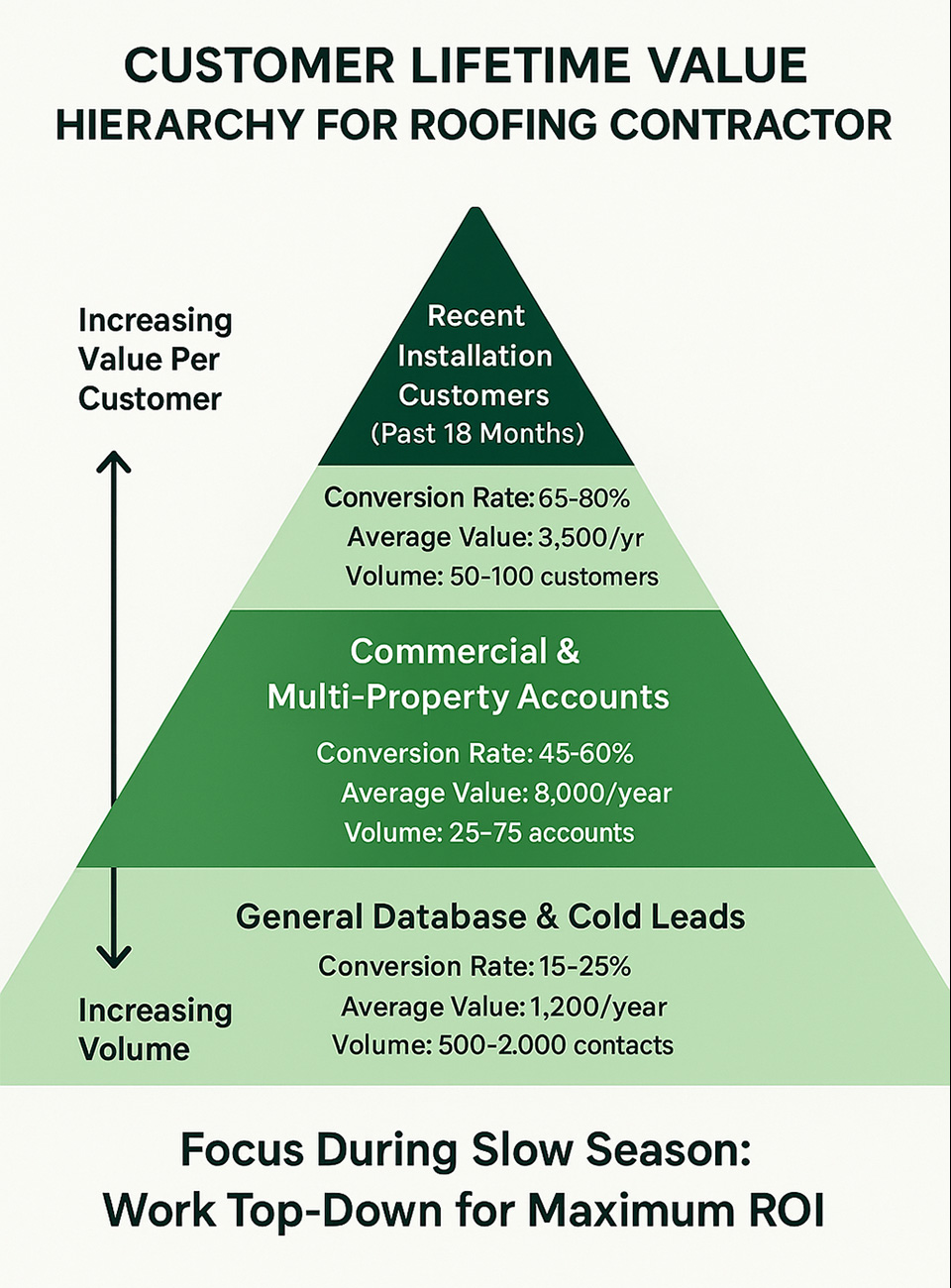
Effective slow-season campaigns require strategic customer segmentation based on purchase history, property characteristics, and timing factors.
High-Value Customer Segments:
- Recent Installation Customers: Highest satisfaction, most likely to provide referrals and purchase complementary services
- Multi-Property Owners: Property managers and landlords with multiple roofing needs and different budget cycles
- Commercial Accounts: Less weather-dependent decision making with maintenance agreements providing substantial recurring revenue
Systematic Account Development Process
Transform slow season downtime into systematic account development that builds long-term customer value through a structured 90-day approach.
90-Day Account Development Plan:
Month 1: Customer Outreach and Assessment
Contact all customers from the past 24 months with seasonal check-in calls, offer complimentary winter inspections, and document additional service opportunities.
Month 2: Referral Campaign Activation
Launch systematic referral requests with satisfied customers, implement a process for collecting testimonials, and follow up on warm referral leads.
Month 3: Pipeline Conversion Focus
Intensive follow-up on warm prospects, present spring scheduling with early-bird pricing, and convert maintenance agreements into full replacement opportunities.
This systematic approach typically generates a 20-40% revenue increase compared to reactive approaches during the slow periods.
Technology Solutions for Slow Season Success
Modern CRM systems, such as Zuper, provide roofing contractors with powerful tools to maximize slow season opportunities through automated workflows, customer data analysis, and systematic follow-up processes.
Zuper’s AI-powered CRM capabilities help contractors maintain consistent customer engagement without manual effort during slow periods. The system automatically tracks customer interactions, schedules follow-up communications, and identifies opportunities for service expansion through smart automation features and data-driven analytics.
These insights help contractors focus their limited roofing slow season resources on the highest-probability opportunities for revenue generation, transforming downtime into strategic growth periods.
Conclusion
The roofing slow season doesn’t have to mean revenue drought. By strategically leveraging your existing pipeline, implementing structured maintenance packages, and systematically working your customer database, you can maintain strong cash flow even when installation work slows down.
The contractors who thrive year-round understand that success during the slow season comes from preparation, systematic execution, and leveraging technology to automate customer engagement. Your CRM data contains the roadmap to sustained growth. The key is knowing how to use it effectively.
Ready to transform the roofing slow season from survival mode to a growth opportunity? Zuper’s all-in-one roofing management platform helps contractors leverage their customer data, automate follow-up processes, and build recurring revenue streams that thrive year-round. Schedule a Demo Today