
Every 99 minutes, a worker dies from a work-related injury in the United States. For roofing contractors, the statistics are sobering: 82% of workplace fatalities are caused by falls. As the third deadliest civilian occupation in America, roofing safety isn’t just about compliance; it’s about protecting lives and building sustainable businesses.
Modern roofing safety practices combine proven protective equipment with innovative technology to keep crews safer while improving efficiency. This guide examines essential safety elements that every roofing company should implement, including cutting-edge hands-free solutions that transform the way contractors work at heights.
In this article, you’ll discover:
- Core roofing safety equipment and OSHA requirements
- What roofers use for safety on different project types
- How hands-free technology like smart glasses enhances crew protection
- Best practices for comprehensive safety programs
Understanding the Stakes
The roofing industry has a fatality rate of 51.8 per 100,000 full-time workers, which is ten times higher than that of other construction trades. According to OSHA, falls from roofs accounted for 34% of construction fall deaths between 2003 and 2013.
The consequences extend beyond tragedy. Workplace injuries increase insurance costs, delay projects, and erode client trust. A single incident can devastate a roofing business financially and damage its reputation.
Roofing Safety Equipment Comparison
Here are the four top pieces of safety equipment used today by roofers.
| Safety System | Best For | Key Components | OSHA Standards |
| PFAS | Steep slopes, complex work | Harness, lanyard, 5,000-lb anchor | 29 CFR 1926.50(d) |
| Fall Restraint | Low-slope, flat roofs | Restraint lanyard, anchor | 29 CFR 1926.502(e) |
| Guardrails | Roof edges, commercial | Rails (39-45”), toe boards | 29 CFR 1926.502(b) |
| Warning Lines | Low-slope supplement | Lines, flags, trained monitor | 29 CFR 1926.502(f) |
Essential Roofing Safety Tools and Equipment
Fall Protection Systems
OSHA requires fall protection for all work at heights of six feet or more:
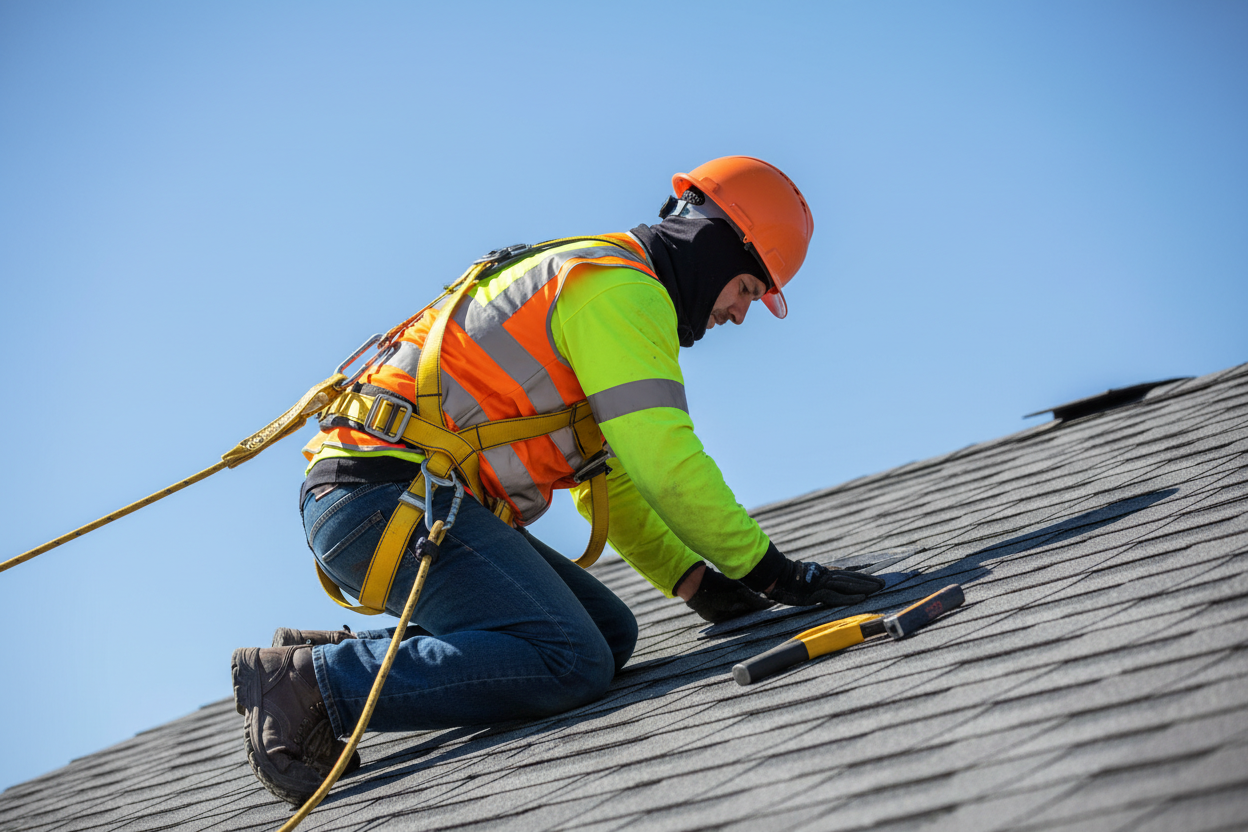
Personal Fall Arrest Systems (PFAS) include full-body harnesses, shock-absorbing lanyards, and anchor points rated for 5,000 pounds per worker. These systems limit free-fall distance to six feet or less.
Fall Restraint Systems use shorter lanyards that prevent workers from reaching hazardous edges.
Guardrail Systems provide passive protection with top rails 39 to 45 inches high, capable of withstanding 200 pounds of force.
Warning Line Systems serve as supplementary protection on low-slope roofs, using ropes, wires, or chains with flags placed at six-foot intervals to mark safe work areas. These systems require a designated safety monitor who stays in visual contact with workers and has no other responsibilities besides watching for unsafe conditions.
Access and Tool Safety
Extension ladders must extend three feet above landing surfaces and maintain a 1:4 ratio. Scaffolds need full platforms with guardrails when elevated more than ten feet. Tool tethering systems prevent dropped objects from injuring workers below. A smart scheduling system can help streamline equipment coordination to ensure safety without adding delays.
Personal Protective Equipment (PPE)
What do roofers use for safety starts with proper PPE. OSHA mandates specific equipment:
Hard hats protect against falling objects. Steel-toe boots with slip-resistant soles provide secure footing on angled surfaces. Safety glasses shield eyes from debris. High-visibility clothing ensures crew visibility. Work gloves protect hands when handling materials and tools.
For specialized work like torch-applied roofing, long-sleeve cotton clothing helps prevent burns from hot tar, which can reach temperatures of 500°F.
The Game-Changer: Hands-Free Smart Glass Technology
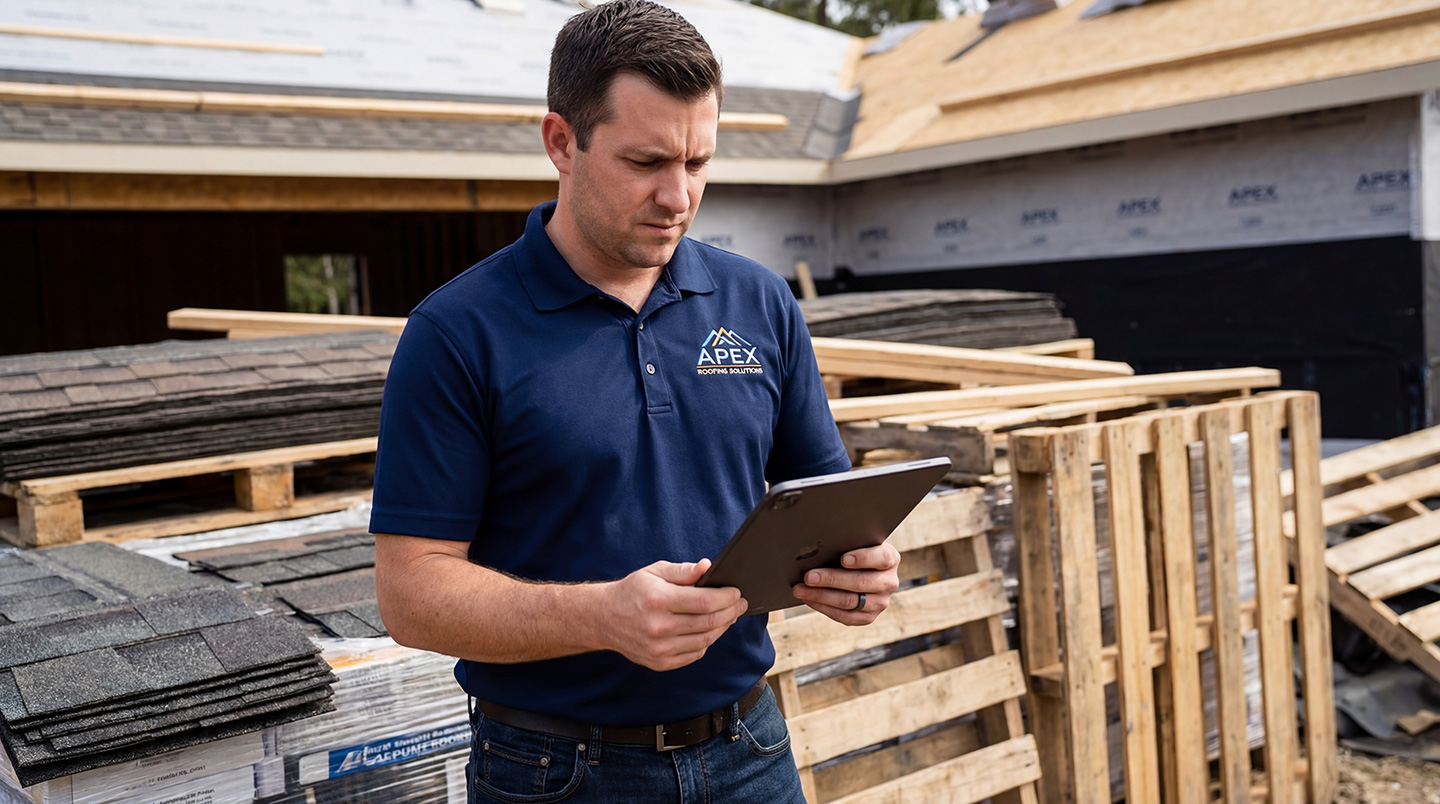
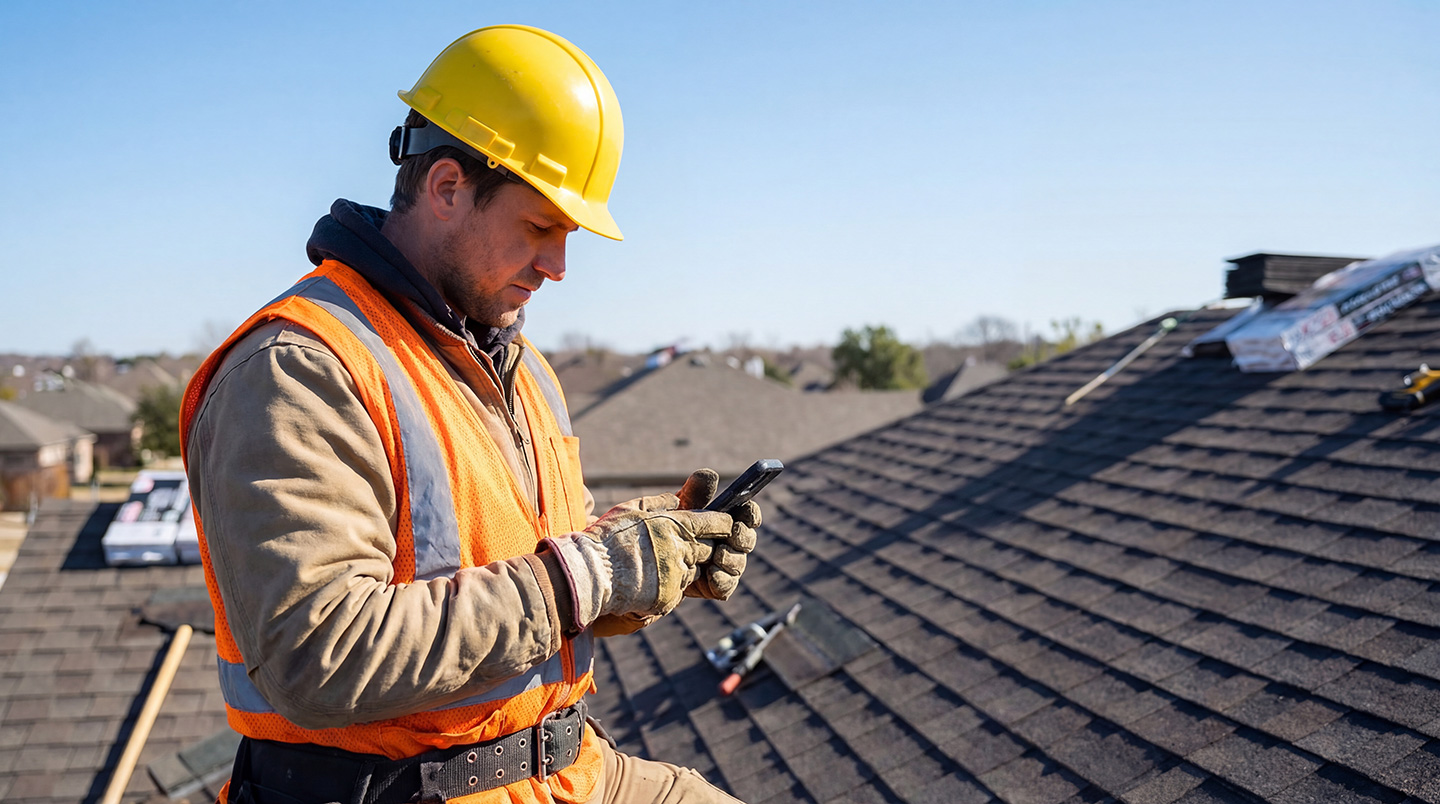
Traditional documentation puts roofers at risk. Juggling smartphones and tablets while working at heights divides attention and requires hands that should be maintaining balance and using safety equipment.
Zuper Glass represents a breakthrough in roofing safety tools by enabling completely hands-free operation. These AI-powered smart glasses weigh just 1.5 ounces, fit together with safety helmets, and provide up to eight hours of battery life.
How Hands-Free Technology Enhances Safety
Voice-activated control enables roofers to capture photos, record videos, complete checklists, and take notes without needing to touch a device. Both hands remain free to maintain balance and secure proper footing.
The AI-powered system automatically transcribes and processes visual and audio input, eliminating the need for manual documentation that can divert focus from the work environment. Real-time synchronization connects field teams with office staff, ensuring supervisors can monitor conditions without needing to climb onto every roof.
Smart Glass Safety Benefits
| Feature | Safety Benefit | Productivity Gain |
| Voice Controls | Hands free for balance | No work stoppage for documentation |
| AI Processing | Eyes stay on work surface | Eliminates post-job paperwork |
| Real-Time Sync | Remote hazard identification | Instant safety communication |
| Rugged Build | Reliable in harsh conditions | No equipment failures |
| 8-Hour Battery | All-day operation | No charging interruptions |
The technology also addresses workforce recruitment. Younger workers expect intuitive, tech-driven tools, making modern safety technology attractive to new generations while protecting experienced crews.
Implementing Comprehensive Safety Programs
Equipment alone doesn’t create safety; culture and consistency do. Leading roofing companies implement these practices:
Daily Inspections: Foremen inspect all equipment and identify hazards before work begins, including checking harness condition, anchor integrity, and weather conditions.
Toolbox Talks: Brief daily meetings remind crews of safe practices and review recent incidents.
Documented Training: OSHA requires fall protection training to be conducted by competent persons who are certified in accordance with 29 CFR 1926.503(b). Training covers hazard recognition, equipment inspection, and rescue procedures.
Leadership by Example: When supervisors consistently wear proper PPE and follow protocols, crews take roofing safety seriously.
Emergency Preparedness: Every site needs rescue plans for fallen workers, as suspension trauma develops quickly.
Choosing Equipment for Your Projects
What do roofers use for safety on different projects? It depends on roof characteristics:
Low-slope residential roofs often use fall restraint systems and warning lines. Steep-slope work requires full PFAS with harnesses and self-retracting lifelines. Large commercial projects benefit from guardrail systems protecting entire crews.
Consider weather resistance, visibility features, and ergonomic design. Uncomfortable or inconvenient equipment often goes unused, rendering it worthless regardless of certification.
The Future of Roofing Safety
Roofing safety continues evolving as technology addresses traditional challenges. Hands-free smart glasses represent the convergence of proven safety practices with modern innovation. By keeping roofers focused on surroundings while capturing documentation, these tools make worksites safer and more efficient simultaneously.
The industry has made remarkable progress in reducing fatalities and injuries. By implementing OSHA-compliant fall protection, providing comprehensive PPE, maintaining equipment properly, and adopting technologies that eliminate dangerous distractions, forward-thinking contractors build cultures where everyone goes home safely.
Ready to transform your roofing safety program? Explore how hands-free technology protects your crew while streamlining operations. Discover Zuper Glass at glass.zuper.co and see how AI-powered smart glasses are revolutionizing roofing safety for contractors across North America.