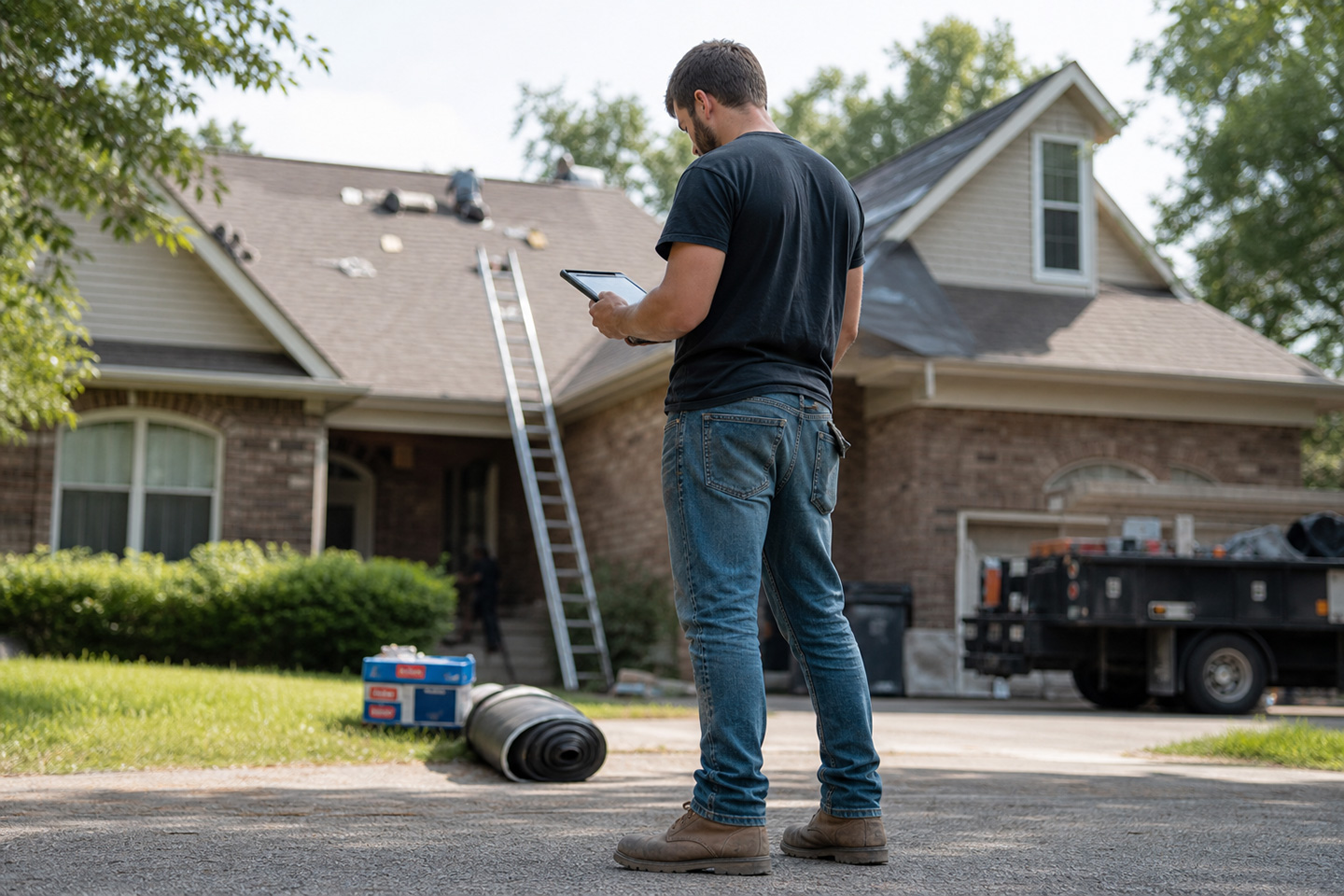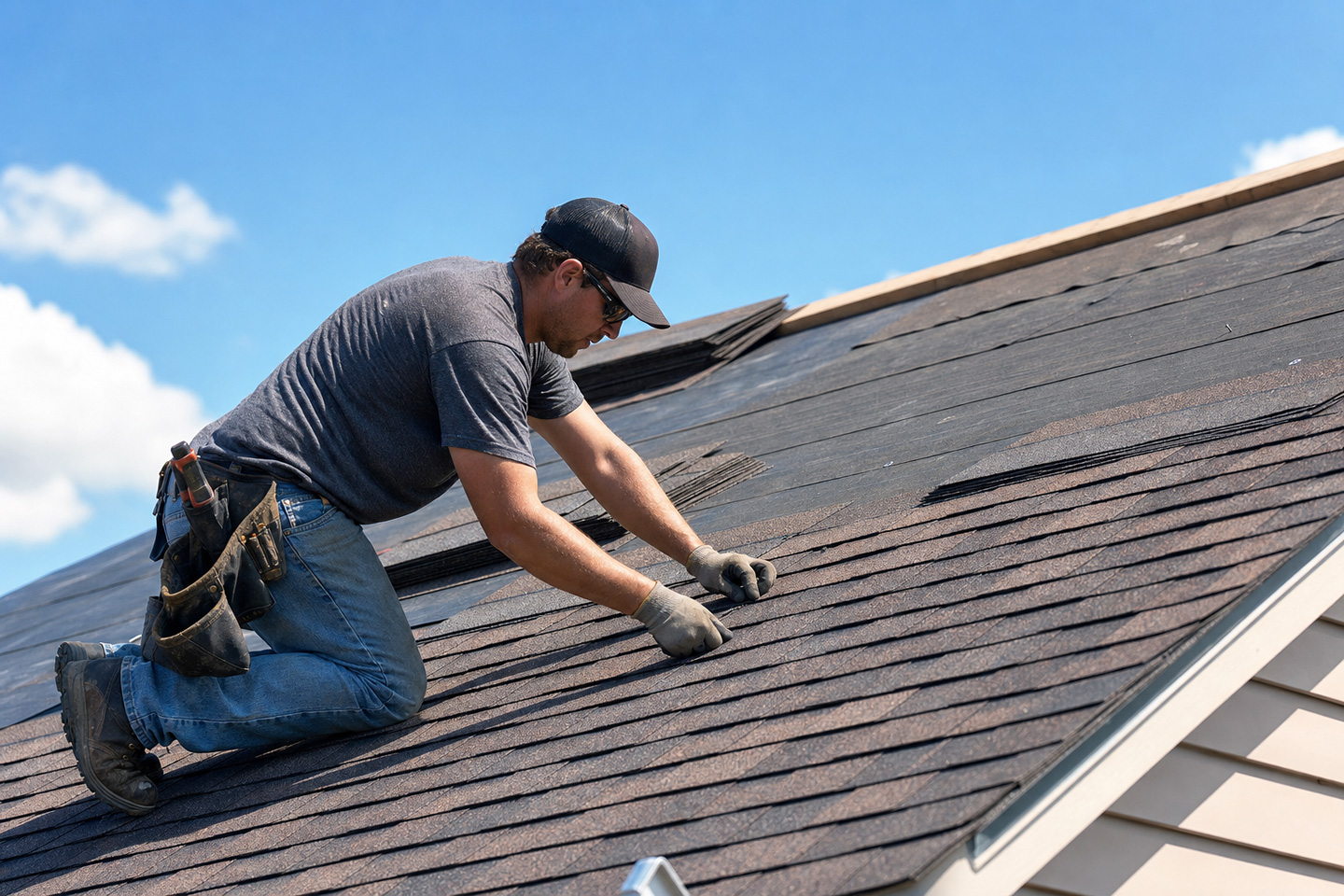

A roof slope calculator gives you a number. What you do with that number is what separates a quick ballpark from a profitable job. Contractors who calculate pitch accurately but estimate manually still face the same problems. Re-keyed data. Misapplied multipliers. Materials ordered short. Crews dispatched without knowing what surface they’re walking onto.
Slope affects everything from how much material you order to what your crew is walking onto when they arrive. This piece starts with the math: pitch multipliers, total cost impacts by category, and crew safety requirements. It also shows where manual workflows break down and how Zuper connects pitch data to every downstream document.
How to Calculate Roof Slope
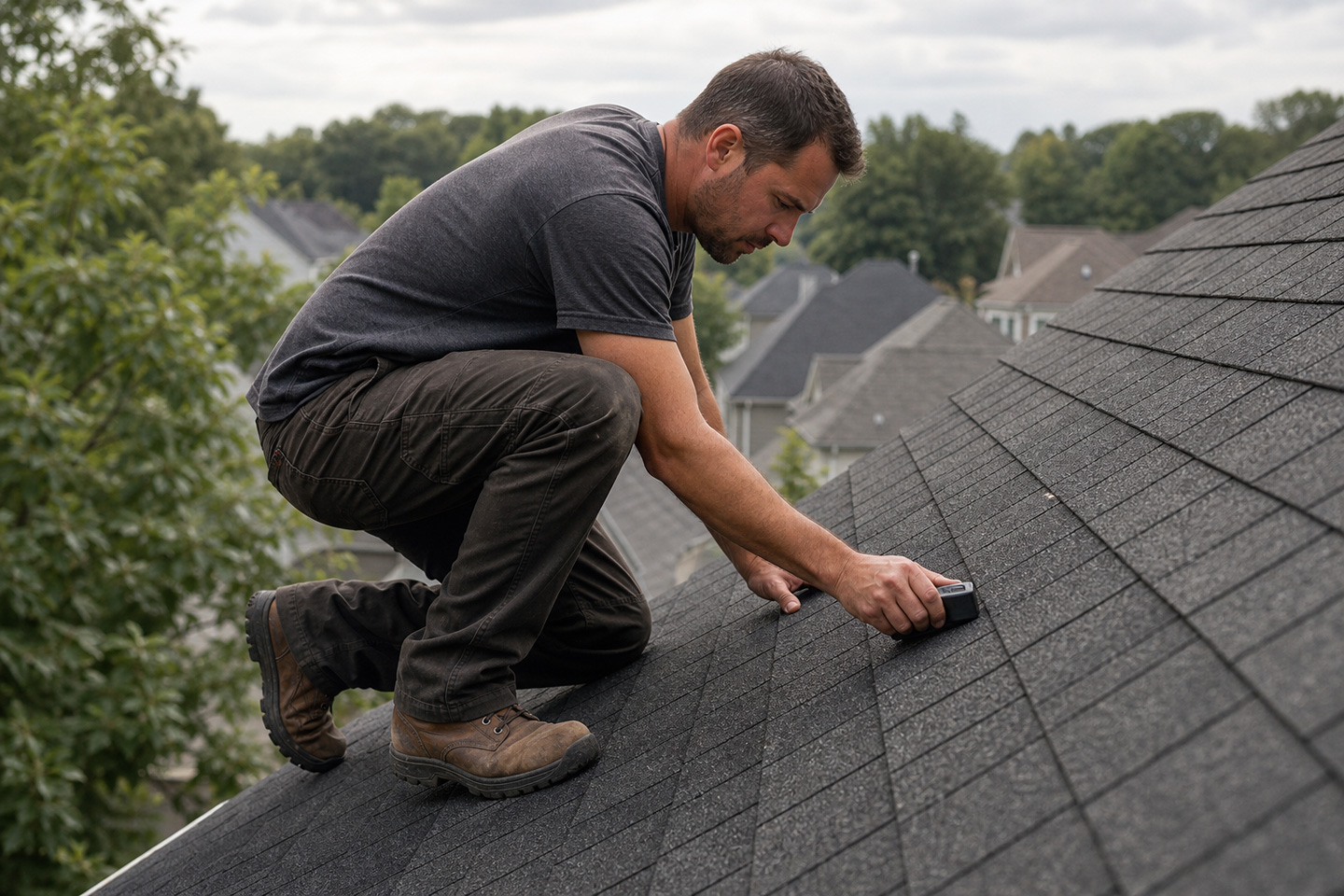
Roof slope is rise over run: the number of inches a roof rises for every 12 horizontal inches. In the field, most contractors call this measurement pitch, and the terms are used interchangeably throughout this article. A 6/12 pitch rises 6 inches per foot of run. On-site, contractors typically use a pitch gauge, a level and tape, or a smartphone app to confirm pitch. Many also use a dedicated roof slope calculator or a measurement tool like EagleView, Hover, or GAF QuickMeasure to confirm the number before building an estimate. The formula is straightforward. What isn’t straightforward is what happens to that number once you have it. Does it stay in a PDF, or does it reach your estimate, your crew, and your materials order?
Slope, Pitch Multipliers, and What They Mean for Your Jobs
| Pitch Range | Rise:Run | Pitch Multiplier | Material Quantity Impact | Approx. Total Cost Impact |
| Low | 6/12 | 1.01–1.05 | Minimal added square footage | Minimal |
| Moderate | 5/12–7/12 | 1.08–1.16 | 8–16% more material needed | ~+10–25% |
| Steep | 8/12–10/12 | 1.20–1.30 | 20–30% more material needed | ~+30–40% |
| Very Steep | 11/12+ | 1.36–1.41 | 36–41% more material needed | ~+50–60% |
A 2,000 sq ft footprint at 6/12 pitch becomes 2,236 sq ft once you apply the exact multiplier for that pitch, 1.118. Underestimate that number and you’re short on shingles before the job is halfway done. On steep-slope roofs above 6/12, labor hours alone can increase by 25-50% or more. Add additional materials and safety staging, and the total cost impact can reach 30-60% depending on pitch. A 5% labor underestimate on a $20,000 job costs $1,000 straight from your margin.
What the Crew Already Knows That the Office Misses
Your installers know this better than any spreadsheet: a 10/12 is more than a different ratio. It’s a different day on the roof. You’re talking roof jacks, safety harnesses, a slower nail gun rhythm, and extra time staging materials at the eave. A 6/12 and a 10/12 on the same street aren’t the same job, even if they share the same square footage.
| Pitch Range | Safety Equipment | Crew Setup | Timeline Buffer |
| 2/12–4/12 | Warning line system or basic harness | Standard 2-person crew | Matches square footage |
| 5/12–7/12 | Harnesses + roof jacks | 2–3 person crew | Add 10–20% |
| 8/12–10/12 | Full staging, harnesses | 3–4 person crew with lead | Add 25–35% |
| 11/12+ | Ground-level perimeter scaffolding | Specialist crew | Add 45–60% |
When pitch data doesn’t reach your crew before they pull up to the job, they’re walking in cold. On a 10/12, that means arriving without the right safety setup for what’s actually on that roof.
A Roof Slope Calculator Is a Starting Point, Not a Solution
Standalone roof slope calculators solve the math, not the workflow. You can confirm a 9/12 on a two-story colonial and still build a losing estimate. If that number doesn’t reach your materials list, labor pricing, and crew schedule, the job is underpriced before it starts.
This is where most roofing operations lose margin. The calculation happens in the field. The estimate gets built at the office. By the time pitch data makes it to a proposal, it’s been touched by two or three people. It gets re-entered at least once and almost certainly rounded wrong somewhere. If you’re handling storm response and trying to turn 12 assessments in 48 hours, that gap compounds fast.
Measurement tools like EagleView, Hover, and GAF QuickMeasure already calculate pitch as part of their output. For most contractors, that pitch data doesn’t go anywhere. It gets printed, read once, and filed. For a deeper look at where re-entry errors compound, see How To Reduce Estimate Errors in Roofing.
The Cost of Keeping Pitch Data Disconnected
When pitch data doesn’t connect to downstream workflows, three things happen consistently:
- Estimates run short on materials, because the multiplier got rounded or skipped during manual entry
- Crews arrive unprepared for actual roof conditions, burning time at the start of the job on a safety setup that wasn’t scoped into the schedule
- Supplement requests to insurance adjusters miss steep-slope labor line items, and contractors absorb those costs
That last one hits hardest during hail season. Take a contractor supplementing 15 hail-damaged roofs in a two-week window. If pitch data isn’t standardized in the estimate from day one, every supplement has to be rebuilt from scratch. That’s real money left on each job. Accurate pitch data, built into your estimates from the start, is how you stop that.
For a broader look at how measurement accuracy affects margins, see Accuracy Rates of Roofing Software. If you’re evaluating what platform should hold all of this together, Best Roofing CRM 2026 covers what to look for.
How Zuper Moves Pitch Data Into Your Estimate Automatically
Zuper connects directly with EagleView, Hover, GAF QuickMeasure, and the other measurement tools roofers already use. When pitch data comes in, it flows directly into Zuper’s Intelligent Quoting engine. Pitch triggers the appropriate multipliers and adjusts material quantities before the proposal is sent to the homeowner. Instead of your office staff rebuilding that number five times, it gets entered once. From there, it carries through every downstream document: estimate, work order, proposal, invoice.
For the crew, that change is concrete. Your installer arrives with the full picture: safety setup in the job record, materials staged to spec, scope documented before anyone climbs the ladder. No midday call to the office asking whether somebody ordered toe boards. No re-quoting after the fact because the original estimate didn’t account for staging time on a steep pitch.
Zuper’s Dispatch Assistant helps your dispatcher match the right crew to the right job by filtering on skills, location, and availability, so steep-pitch work gets assigned to teams who can handle it. That routing is built into how the dispatch board works, not a manual call made fresh on every job. That kind of AI-driven automation cuts the manual admin burden your team carries on every estimate and job record. For a full picture of where that time goes, see How to Reduce Admin Time Using Roofing Business Software.
Your Roof Slope Calculator Should Feed Everything Downstream
Pitch data that lives in a PDF doesn’t protect your margin. Pitch data that flows into your estimate, triggers the right crew assignment, and builds the right proposal does. Most contractors are one data connection away from faster estimates and a field crew that arrives fully briefed.
That’s the job the roof slope calculator can’t do on its own. Zuper does it: taking that number and carrying it through every step without anyone re-entering it along the way.
Book a demo to see how Zuper connects pitch data to every step of the job.