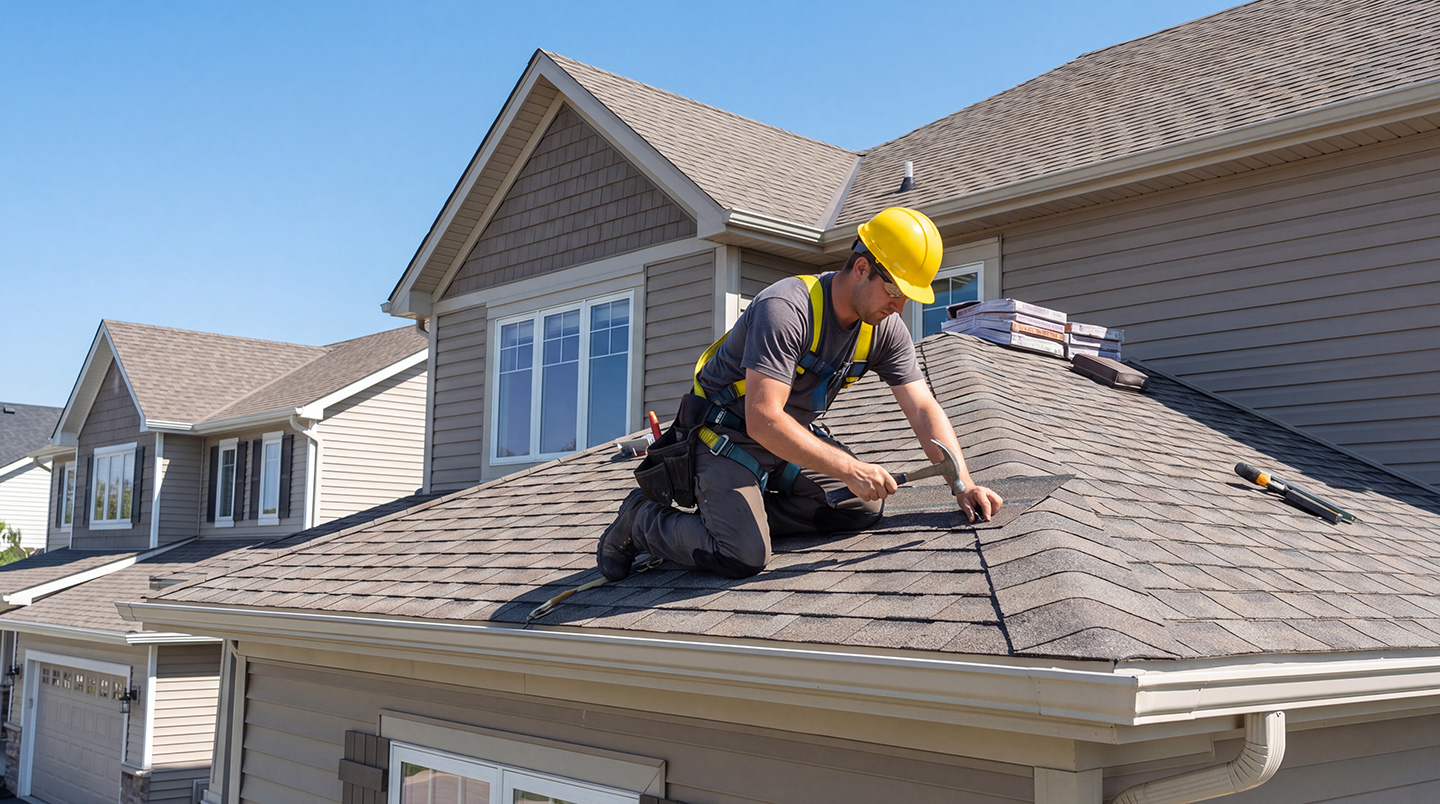


Small estimate errors compound into significant margin erosion on roofing projects. Most of these losses are preventable. Based on industry data and contractor performance studies, here are the five biggest culprits and how to eliminate them.
The Five Most Common Estimate Errors in Roofing 2026
If you’re losing money on jobs you thought would be profitable, you’re dealing with one or more of these estimate errors. Understanding what’s draining your margins is the first step to reduce estimate errors in roofing operations.
| Error Type | Typical Impact | Primary Cause |
| Inaccurate measurements | Material shortages, cost overruns | Manual takeoffs, missed roof features |
| Missing line items | $200-$1,300 in forgotten costs | Permit fees, disposal costs |
| Poorly defined scope | 15-30% cost overrun | Incomplete documentation |
| Manual calculation errors | Hours of unpaid labor | Spreadsheet errors, transcription mistakes |
| No post-job cost tracking | Repeated preventable errors | Lack of feedback loop |
Source 1 | Source 2 | Source 3 | Source 4
These five error types share a common thread: they stem from manual processes and disconnected workflows rather than contractor skill or effort. When you measure roofs manually, even small mistakes in pitch or square footage compound into material shortages and costly mid-project supply runs.
Most roofing estimate errors come from manual measurements and disconnected tools; integrating measurements, pricing, and job workflows significantly improves estimate accuracy.
The Real Cost of Estimate Errors
Let’s break down how small errors compound to kill your profits. Consider a typical residential reroof estimated at $15,000 with a 20% profit margin. You’re planning to make $3,000 on this job.
During the job, small adjustments happen: Extra shingles when waste exceeds 10%. An additional crew day because measurements were off. Permit fees you forgot to include. Disposal costs higher than expected. These minor expenses, when added together, total $2,000-$3,000. Your 20% margin just dropped to 5-10%.
Here’s how errors compound on a single $15,000 project:
Estimate phase: Your estimator uses manual measurements and misses a complex valley section. You order materials based on 28 squares when you actually need 32. Cost impact: $0 (not visible yet).
Installation Day 1: It’s the kind of error your foreman finds at 7 a.m., standing on the deck with three squares too few and a supplier who can’t deliver until tomorrow.Your crew discovers the measurement error. A mid-project material order is required at premium pricing. Cost impact: $350 (extra 4 squares with rush delivery markup).
Day 3: Because permit fees weren’t included in the original quote, you absorb the $450 cost rather than requesting a change order. Disposal bin rental was also forgotten. Cost impact: $1,150 ($450 permit + $700 disposal).
Project completion: The material shortage delayed the project by 2 days. Your crew had partial downtime while waiting for materials. Cost impact: $1,150 (2 days × $575 partial crew downtime).
Final tally: What started as a simple measurement error cascaded into $2,650 in unplanned costs. Your $3,000 profit became $350. Your 20% margin dropped to 2.3%.
Without post-job cost tracking, you won’t connect these dots. You’ll repeat the same measurement mistakes, forget the same line items, and wonder why “profitable” jobs keep disappointing.
Do 50 projects a year? Reducing errors from 10-15% down to under 5% protects $37,500-$75,000 in annual margin. That’s real money.
The competitive advantage matters too. When your final invoices match your estimates, and projects finish on schedule, customers become referral engines. They send you new business without marketing spend. In an industry where project delays and cost overruns are common, contractors who consistently deliver on-estimate and on-schedule build reputations that competitors can’t match.
How to Reduce Estimate Errors in Roofing
You need to address four areas: measurement precision, calculation consistency, current pricing, and learning from past jobs. Here’s what works.
Integrated Measurement Systems
Third-party measurement tools like EagleView, Hover, RoofScope, and GAF QuickMeasure combine satellite imagery, aerial photography, and 3D modeling to give you accurate dimensions without climbing every roof. These systems calculate total square footage, factoring in pitch and slope. They measure ridges, valleys, and hips. They count vents and penetrations. They adjust waste factors based on roof complexity.
The breakthrough happens when roofing measurement software pulls those measurements directly into your estimating, pricing, and project workflows. No manual entry means no transcription errors or math mistakes. Your crew gets the same measurements your estimator used, eliminating the handoff gap where scope details get lost.
Digital Templates That Handle Calculations
Estimate templates built for common project types give you consistency with room for customization. Pre-configured line items, automated material calculations, and digital workflows eliminate spreadsheet errors and confusion over handwritten notes.
Key benefits:
- Dynamic pricing: Databases connected to your suppliers keep material costs current and protect margins when prices change
- Standardized line items: Pre-configured checklists ensure nothing gets forgotten from quote to quote
- Professional formatting: Automated proposal generation maintains consistent branding and presentation
Why Pricing Updates Matter Now
Construction material prices were 43.4% higher in November 2025 than in February 2020, with steel and aluminum products particularly affected by tariffs that doubled to 50% in mid-2025. If you’re using outdated pricing data, you’re eating those increases. When pricing stays current, and you can deliver proposals in hours instead of days, you protect profitability while closing leads faster.
Intelligent Quoting Connects Everythong On-Site
Intelligent quoting systems connect inspection findings, measurements, and job workflows in one mobile interface. Here’s what happens during your roof inspection:
You capture damage, accessories, and scope details in structured fields as you walk the property. The system pulls measurements from EagleView or Hover directly into the job record. While you’re still on the roof, the platform builds the quote in the background using your preconfigured formulas and product catalogs. Before you leave the property, you generate a branded PDF proposal with tiered options, e-signature capability, and on-the-spot payment processing.
The competitive advantage: Contractors who can quote on-site during the initial inspection close more jobs than those requiring days of back-office processing.
You stop losing data between inspection and estimate. Your measurements flow directly into material calculations. Pricing comes from your configured catalogs. All line items from your standardized checklist populate without retyping. The result: fewer errors, faster quotes, and better margins.
Voice Notes That Capture What You’d Forget
You stop missing line items when AI captures scope details you’d normally scribble on a clipboard. AI voice documentation turns your verbal walkthrough with the homeowner into structured job notes. You mention the skylight replacement and flashing repair while standing on the property, and those requirements flow directly into your estimate checklist.
Your crew gets complete scope information because the system captured the homeowner’s verbal walkthrough as you went. Field-to-office handoffs stay clean with AI job summaries that pull key details from inspection notes, photos, and measurements into a single briefing your team actually reads.
Post-Job Cost Analysis and Feedback Loops
Project management software that tracks actual costs against estimates lets you improve continuously. When the same platform handles estimating, scheduling, field operations, and invoicing, you can compare what you quoted to what jobs actually cost.
This closed-loop feedback identifies your systematic errors. Maybe you consistently underestimate tear-off time. Maybe you miscalculate waste on complex roofs. Maybe you miss specific line items. You can fix these patterns once you see them.
Where to Start
Audit your process. Track actual versus estimated costs across your recent projects. Look for patterns. Where do gaps consistently appear?
Go digital. Replace spreadsheets and handwritten calculations with tools that handle the math and material calculations.
Integrate measurement. Adopt technology that feeds measurements directly into your estimating system. Eliminate manual entry.
Connect your workflows. Choose platforms that link estimation to job costing. Create a feedback loop that improves accuracy based on real project data.
Ready to Fix This?
Small estimate errors drain margins through measurement mistakes, missing line items, poorly defined scope, manual calculation errors, and a lack of systematic improvement. You can fix this. Platforms that connect aerial measurements, calculation engines, current pricing, and post-job analysis eliminate the most common errors while helping you close jobs faster.
Zuper’s AI Operating System for Roofing connects measurements, intelligent quoting, project tracking, and invoicing in one workflow. See how it works: Schedule a demo.