
If drone data sits in a cloud folder or lives in a separate measurement app disconnected from your scheduling and invoicing, it creates friction rather than value. Roofing software for drones & AI isn’t about the drones themselves. It’s about what you do with the data they generate and whether that data flows directly into the daily operations that run your business: estimates, inspections, work orders, crew assignments, materials ordering, and customer invoicing. When aerial imagery and AI-powered insights are integrated into a unified operating platform, contractors gain speed, accuracy, and profitability. When they’re not, the technology becomes just another tool to manage.
How Drones & AI Are Being Used in Roofing Today
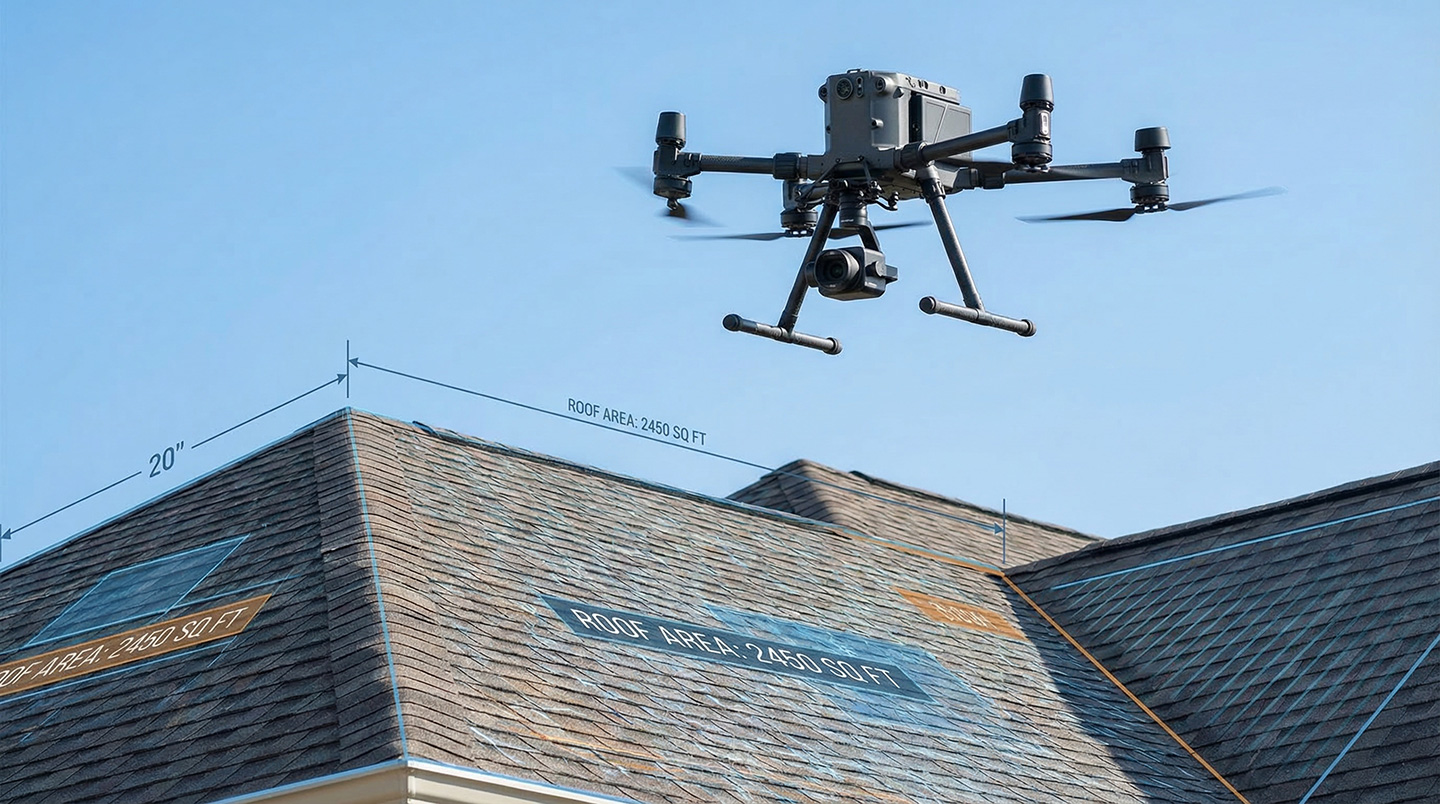
Drones are now operational in roofing, with 54% of contractors using them regularly. They capture aerial imagery, process it into roof measurements and 3D models, provide thermal imaging, and enable AI-powered defect detection. According to industry data, AI analysis can identify damage and generate material estimates in minutes, with accuracy rates reaching 95% compared to 70% for manual methods.
But the roof data itself is only an input. The real question is: can your team use it without switching apps, re-entering information, or manually stitching together estimates?
The Data Integration Gap: Where Most Drone Workflows Break Down
Many roofing contractors invest in drone services or measurement tools and quickly discover that getting the data is the easy part. The challenge is embedding that data into everyday operations.
Consider the typical handoffs: drone report → manual entry into estimating tool → separate proposal sent via email → re-entry into scheduling software → materials ordered through a different system → invoice created in QuickBooks after completion. At every handoff, there’s a risk of errors, delays, and duplicated effort. The drone saved time on the roof, but the office spent hours processing the output.
| Workflow Stage | Drone Data Captured | Drone Data Operationalized |
| Data Collection | Drone captures images; measurements sent as PDF | Drone captures images; measurements are imported directly via API |
| Estimating | Manual entry of dimensions into a separate tool | Auto-populated estimate with embedded aerial imagery |
| Proposal | Created in Word/PDF, emailed separately | Generated in the platform, sent digitally with an approval workflow |
| Scheduling | Job details re-entered into the scheduling software | Job auto-creates on the dispatch board from the approved proposal |
| Materials | Ordered manually through a separate vendor system | Purchase order generated automatically from the proposal |
| Invoicing | Created manually in accounting software after the job | Auto-generated from completed work order with actual costs |
| Time Investment | 3-4 hours of administrative work per job | 15-30 minutes of administrative work per job |
| Error Risk | High (multiple manual handoffs) | Low (single source of truth) |
This is why roofing software for drones & AI must prioritize integration over isolated functionality. Drones and AI only create value in roofing when their data is embedded into everyday job workflows, not stored in separate tools. Platforms like Zuper are designed to ingest aerial measurements directly from third-party providers like Hover and import that data into estimates, proposals, and purchase orders, eliminating manual re-entry and keeping all job information in one place.
Where Roofing Software for Drones & AI Creates the Most Value
Integration matters most in four areas where aerial data directly impacts operations:
1. Inspections and Documentation
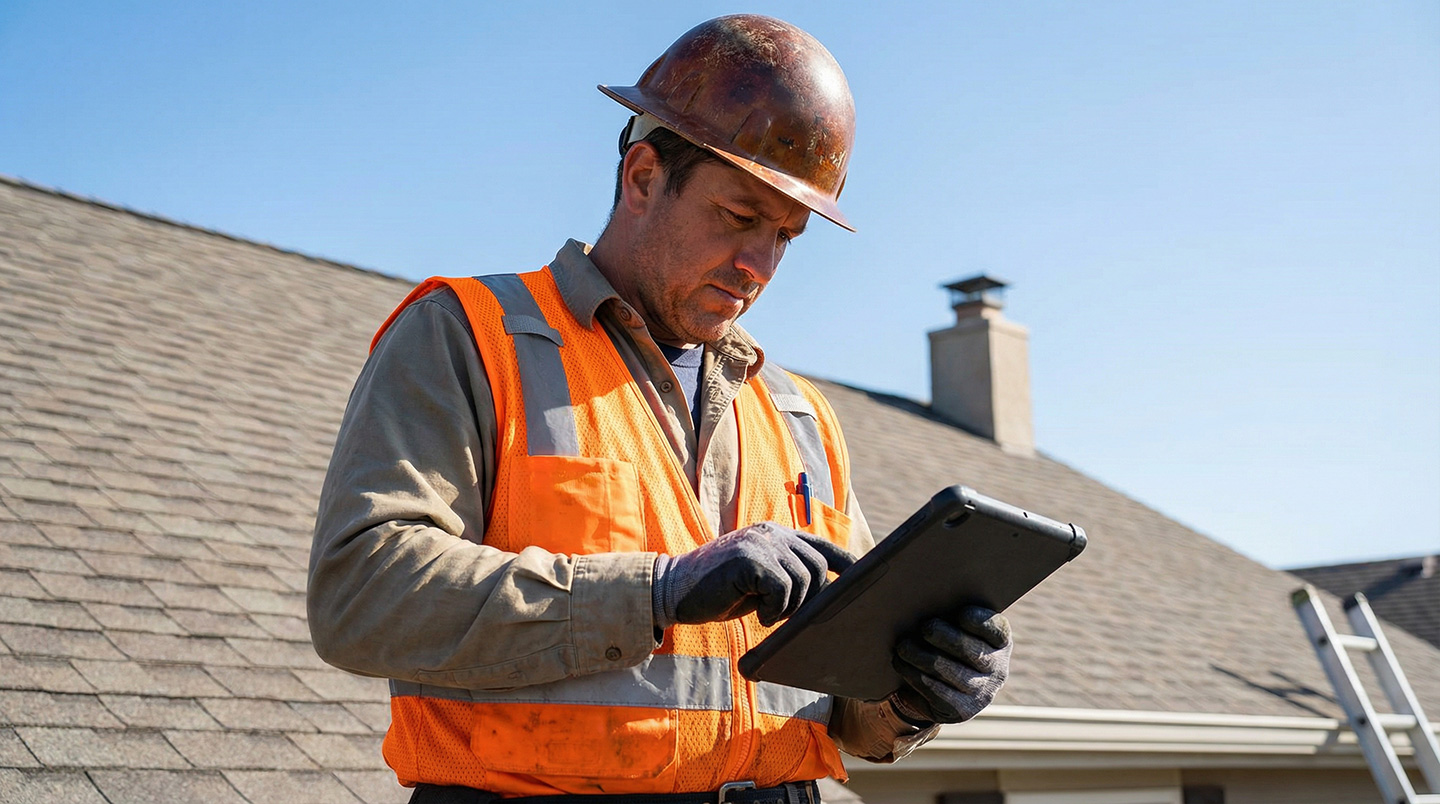
Drones eliminate the need for ladders in many scenarios, reducing safety risks and cutting inspection time. The value multiplies when inspection photos, voice notes, and AI-generated condition reports are automatically attached to the job record.
Advanced platforms now support hands-free documentation through wearable technology. Zuper Glass enables roofers to capture photos, complete checklists, and dictate notes using voice commands, while AI converts spoken updates into structured inspection records.
2. Estimating and Proposals
Accurate measurements are the foundation of profitable estimates. Drone-based measurement tools integrated with software platforms allow contractors to:
- Import roof dimensions directly into line-item estimates
- Auto-calculate material quantities based on pitch and area
- Generate good-better-best proposal options in minutes
- Include annotated aerial images in customer-facing proposals
This speed matters in competitive markets. Contractors who complete inspections and deliver professional proposals on the same day close deals at significantly higher rates than those who require multiple visits or days of follow-up.
3. Scheduling and Crew Dispatching
Once a proposal is approved, software should link inspection data, material requirements, and labor estimates directly to the dispatch board so production managers can:
- Assign crews based on job complexity and material needs
- Send automated notifications with job details and site photos
- Track real-time progress and capture completion photos in-platform
When job data flows seamlessly from estimate to production, scheduling becomes faster and more accurate.
4. Materials Ordering and Invoicing
Drone measurements should drive purchasing decisions, not just estimates. Integrated platforms can:
- Generate purchase orders directly from approved proposals
- Sync orders with suppliers like SRS Distribution
- Track costs in real time and compare them to estimates
- Auto-create invoices based on completed work and actual materials used
- Integrate with QuickBooks Online for seamless syncronization of invoices, payments, and inventory
This closed-loop process protects margins, reduces waste, and improves cash flow. Zuper’s AI Operating System for Roofing consolidates these features into a single platform, eliminating the need to juggle separate tools for CRM, proposals, scheduling, payments, and communication.
Supporting Both Drone-Enabled and Traditional Workflows
Not every roof inspection requires a drone. Weather conditions, site access, and property type all influence how data is captured. The best roofing software for drones & AI supports multiple input methods without forcing contractors into a single workflow.
Zuper’s mobile app offers offline functionality so crews can document work, capture signatures, and update job status even without internet connectivity. Data syncs automatically when they’re back online, keeping the office and field aligned without interruption.
Evaluating Roofing Software for Your Business
When assessing platforms that support drone and AI workflows, consider these criteria:
Integration with measurement providers: Does the software import data from EagleView, Hover, GAF, or RoofScope without manual re-entry?
Workflow continuity: Can inspection data flow directly into estimates, proposals, scheduling, materials ordering, and invoicing?
Flexibility across input methods: Does the system support drone data, mobile capture, manual entry, and wearable devices equally well?
Not every contractor needs every feature. But the platform you choose should support the workflows you use today and the capabilities you’ll need tomorrow.
Conclusion
Drones and AI are powerful tools for quickly and accurately capturing roof data. But technology that sits outside your core operations adds complexity instead of solving it. The real value of roofing software for drones & AI lies in its ability to integrate aerial imagery, measurements, and AI-generated insights into the workflows that drive revenue: inspections, estimates, scheduling, materials management, and invoicing. Contractors who adopt platforms designed for workflow integration gain speed, reduce errors, and close more jobs.
If you’re ready to see how aerial data, AI-powered documentation, and unified operations can transform your roofing business, explore Zuper’s roofing software and discover an AI-native platform built to support modern contractors.